


When someone visits your online store or website, they rarely make a purchase right away. Most people take a journey before they decide to buy. They might first discover your brand through a blog, ad, or social media post. Then they explore your products, compare options, read reviews, and eventually make a purchase. This step-by-step path is what marketers call a sales funnel.
A sales funnel helps businesses understand how potential customers move from first discovering a brand to finally becoming paying customers. However, building a funnel from scratch can be confusing, especially if you are unsure what steps to include or how to guide people through the buying process. That is where sales funnel templates come in.
In this blog, we will first explain what a sales funnel template is and why businesses use it. Then we will break down the four main stages of a sales funnel to help you understand how each step works. After that, we will explore six popular sales funnel templates that businesses commonly use. Finally, we will also share sales funnel templates examples of UI/UX of sales funnel templates, including some of our own, to give you a clearer idea of how these funnels work in real scenarios.
What is a Sales Funnel Template?
A sales funnel template is a structured blueprint that shows how potential customers move through the different stages before making a purchase. Instead of creating the process from scratch, businesses can use a template to organize the key steps that guide visitors from discovering a product to becoming paying customers.
In simple terms, a sales funnel template acts like a roadmap. It outlines what kind of content, offers, and communication should appear at each stage of the customer journey.
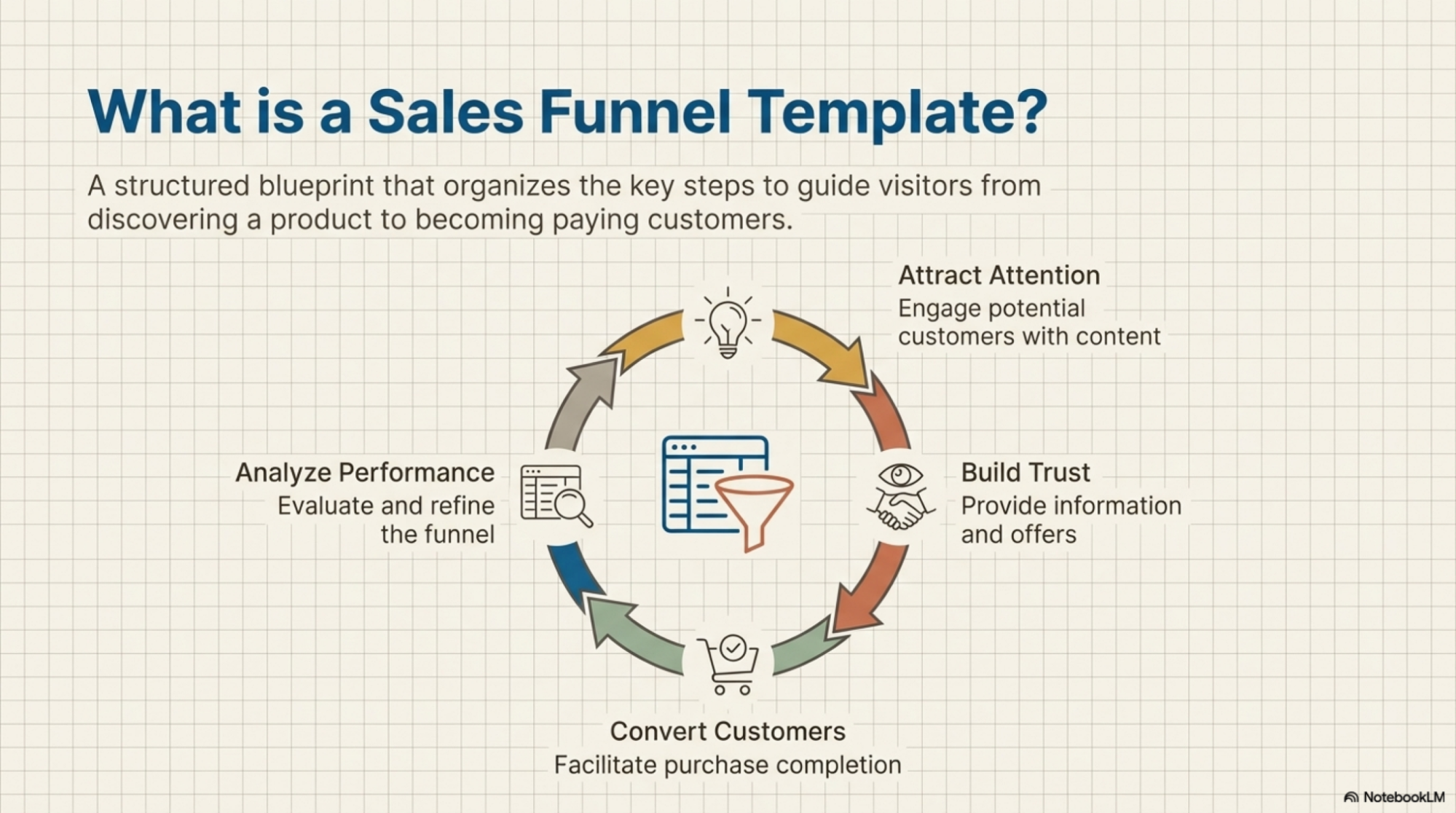
For example, the top of the funnel may focus on attracting attention through blog posts, ads, or social media content. The middle stages usually include product information, email follow-ups, or special offers that help build trust. Finally, the last stage focuses on conversion, where customers complete their purchase.
These templates are useful because they bring structure to the sales process. Instead of randomly promoting products, businesses can design a clear path that gradually moves customers closer to buying. This also makes it easier for marketing and sales teams to understand what actions are needed at each stage of the funnel.
Another benefit of using a sales funnel template is that it saves time and reduces guesswork. Once a working structure is in place, businesses can reuse it for different campaigns, products, or promotions while simply adjusting the content or offers to fit their goals.
To understand where these templates fit in the bigger strategy, it’s also helpful to explore the difference between Sales Funnels vs. Marketing Funnels, as both serve different purposes in guiding prospects from awareness to conversion.
4 Stages of a Sales Funnel Template
A sales funnel is usually divided into a few key stages that represent the journey a potential customer takes before making a purchase.
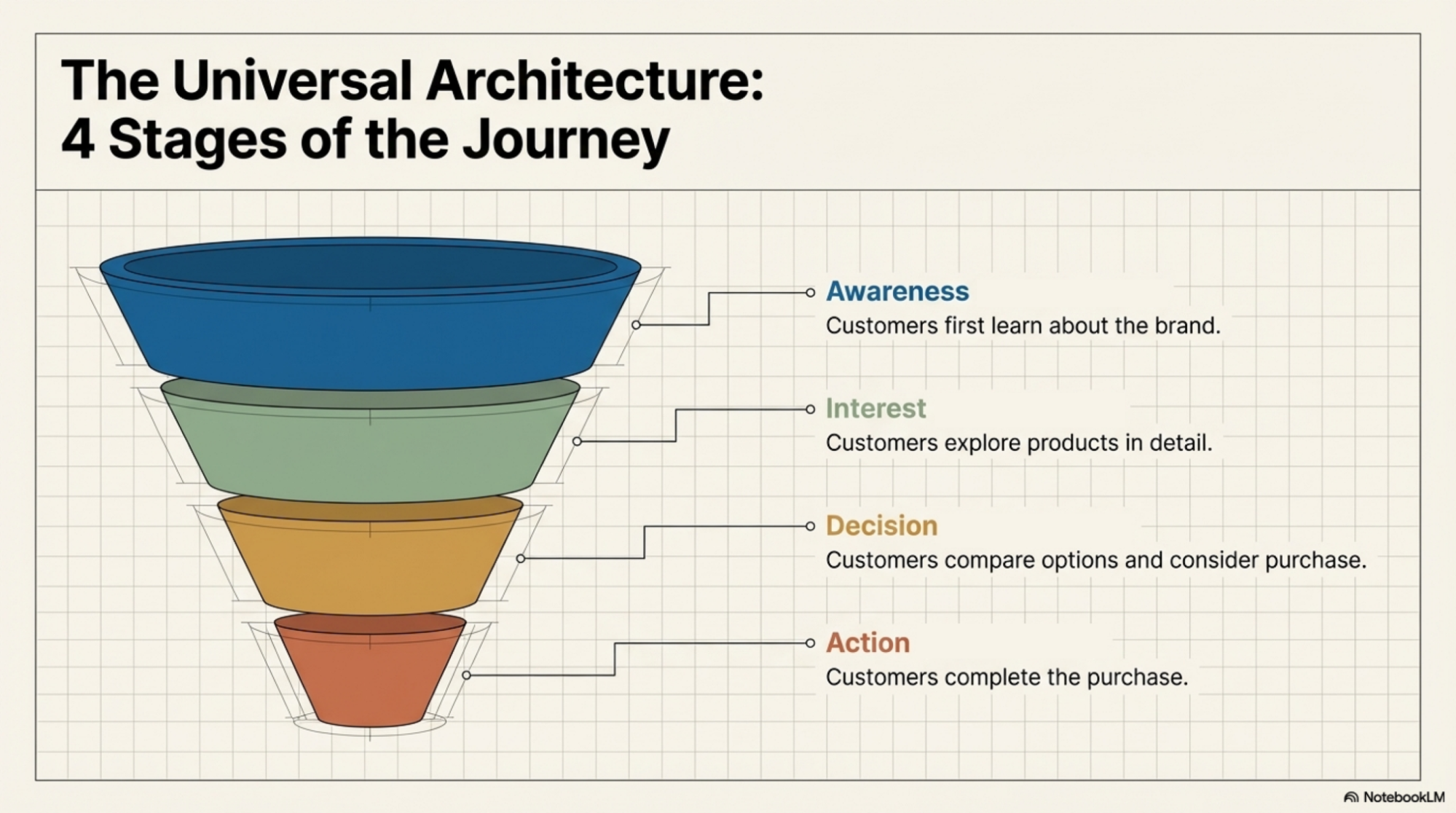
Each stage focuses on a different goal, from attracting new visitors to turning them into loyal customers. Understanding these stages helps businesses create the right content, offers, and communication at the right time.
1. Awareness
The awareness stage is where people first discover your brand, product, or service. At this point, they may not be actively looking to buy anything. They are simply learning about different options or searching for information related to a problem they have.
Businesses usually attract attention at this stage through blog posts, social media content, search engine results, ads, or videos. The main goal here is to introduce your brand and provide useful information that encourages visitors to learn more about what you offer.
2. Interest
Once people become aware of your brand, some of them will move to the interest stage. In this stage, potential customers start exploring your products or services in more detail. They might browse your website, read product descriptions, sign up for newsletters, or follow your social media accounts.
This stage is important because it helps build trust. Businesses often use helpful content, email marketing, product guides, or comparisons to keep potential customers engaged and interested in what they offer.
3. Decision
In the decision stage, potential customers are seriously considering making a purchase. They may compare your product with competitors, check pricing, read reviews, or look for special deals.
To encourage conversions, businesses often provide discounts, limited-time offers, free trials, demos, or testimonials during this stage. The goal is to reduce hesitation and make it easier for the customer to choose your product.
4. Action
The action stage is where the customer finally completes the purchase or takes the desired action, such as subscribing to a service or signing up for a membership.
Even after the purchase, businesses usually continue engaging with customers through follow-up emails, loyalty programs, or personalized offers. This helps improve customer retention and increases the chances of repeat purchases in the future.
Top 6 Sales Funnel Templates
Not every business sells in the same way. Some focus on quick purchases, while others require more time to build trust before customers decide to buy. Because of this, different sales funnel templates exist to match different marketing goals and customer behaviors.
Below are six commonly used sales funnel templates that businesses use to guide potential customers from the first interaction to the final purchase.
1. Lead Generation Funnel
The lead generation funnel is designed to collect contact information from potential customers. Instead of trying to sell immediately, the goal is to turn visitors into leads that can be nurtured later.
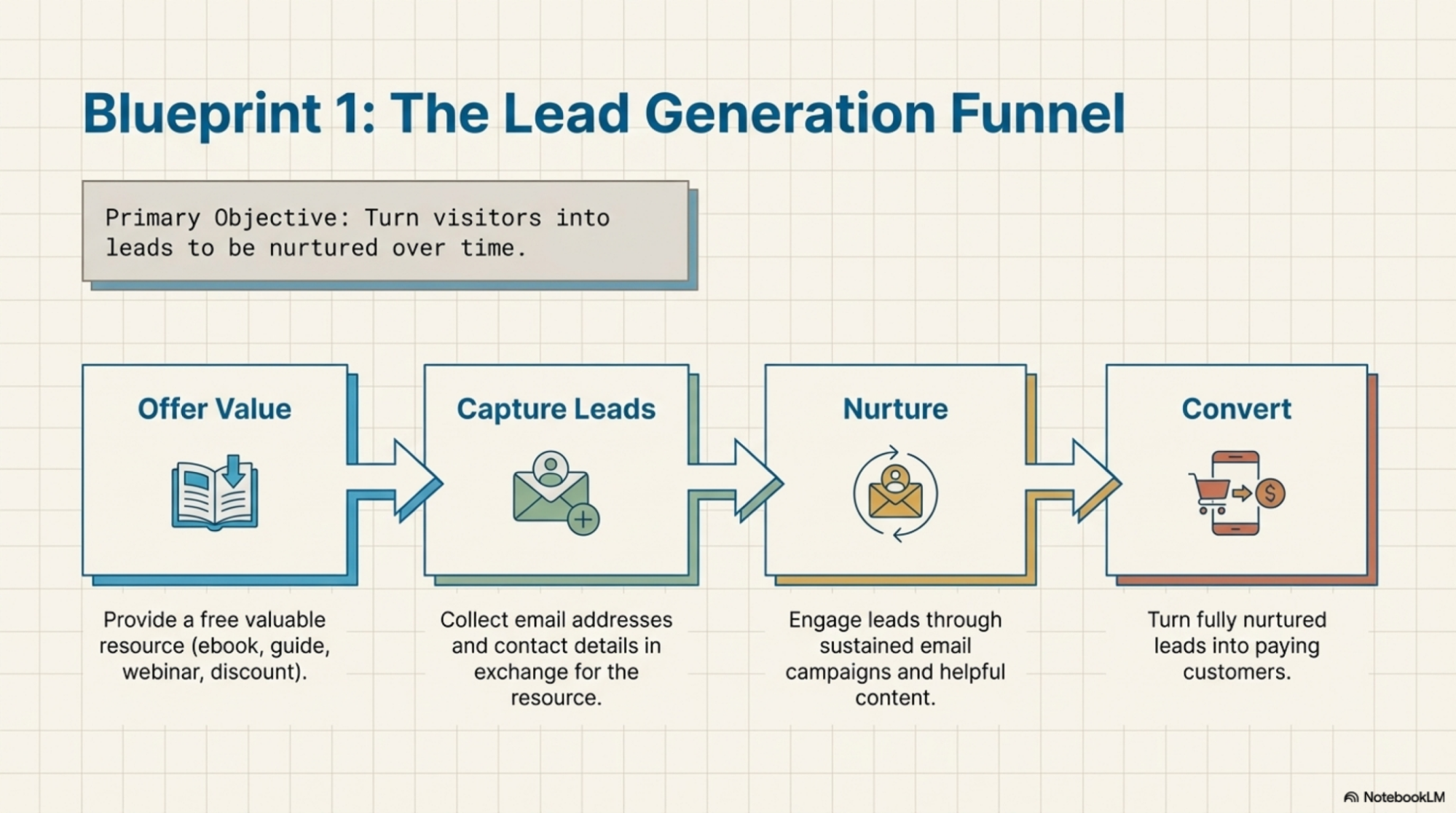
Businesses usually offer something valuable in exchange for a visitor’s email address. This could be a free ebook, guide, checklist, webinar, or discount code. Once the lead is captured, companies continue engaging with them through email campaigns and helpful content until they are ready to make a purchase.
2. Sales Page Funnel
A sales page funnel focuses on converting visitors directly through a dedicated landing page. This page contains detailed product information, benefits, customer reviews, and a clear call to action that encourages visitors to make a purchase.
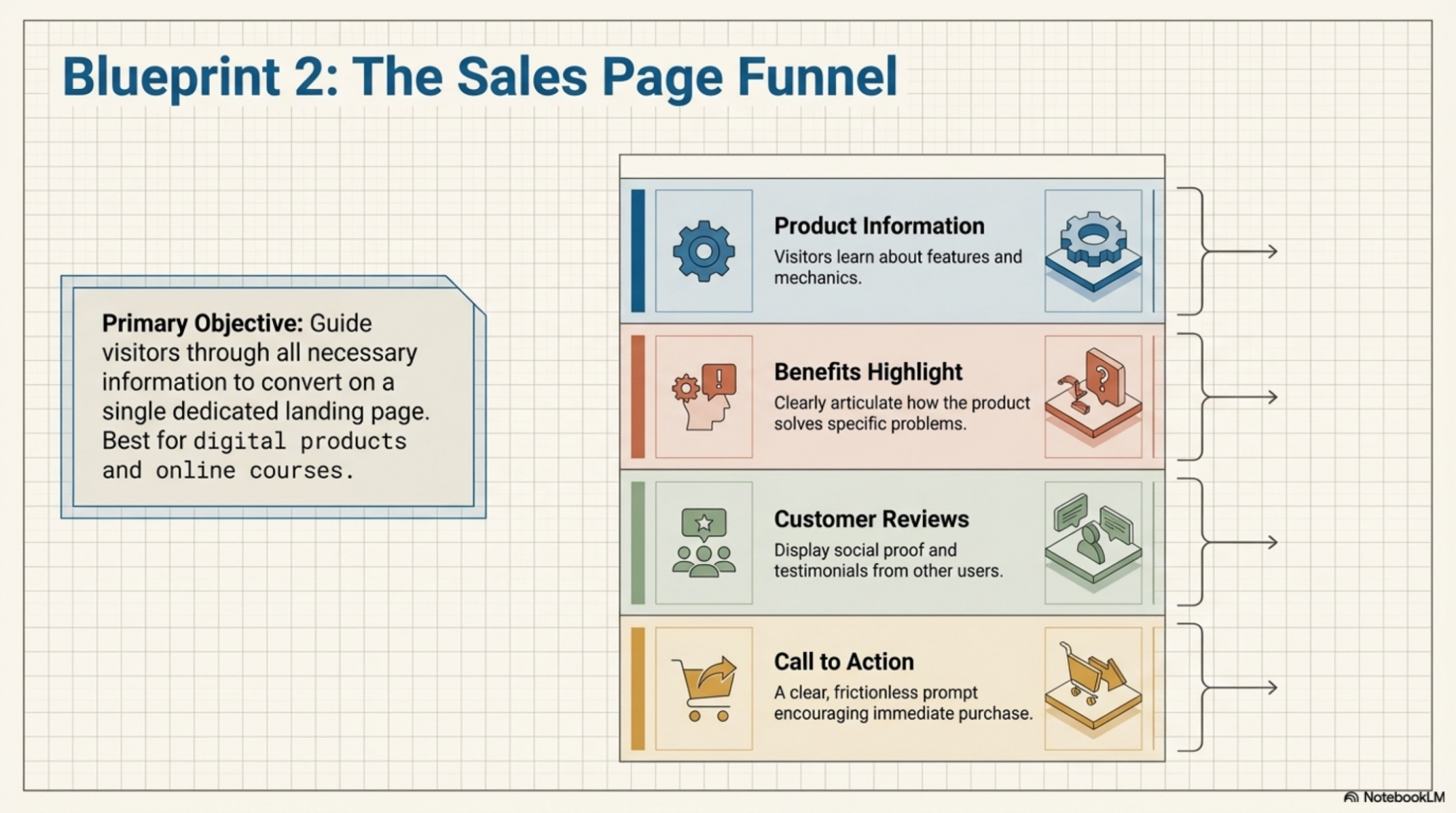
This funnel is often used for digital products, online courses, or limited-time offers where the goal is to guide visitors through all the necessary information on a single page before they decide to buy.
3. Webinar Funnel
The webinar funnel is built around an online event where businesses educate potential customers about a product, service, or topic. Visitors usually register for the webinar by filling out a form.
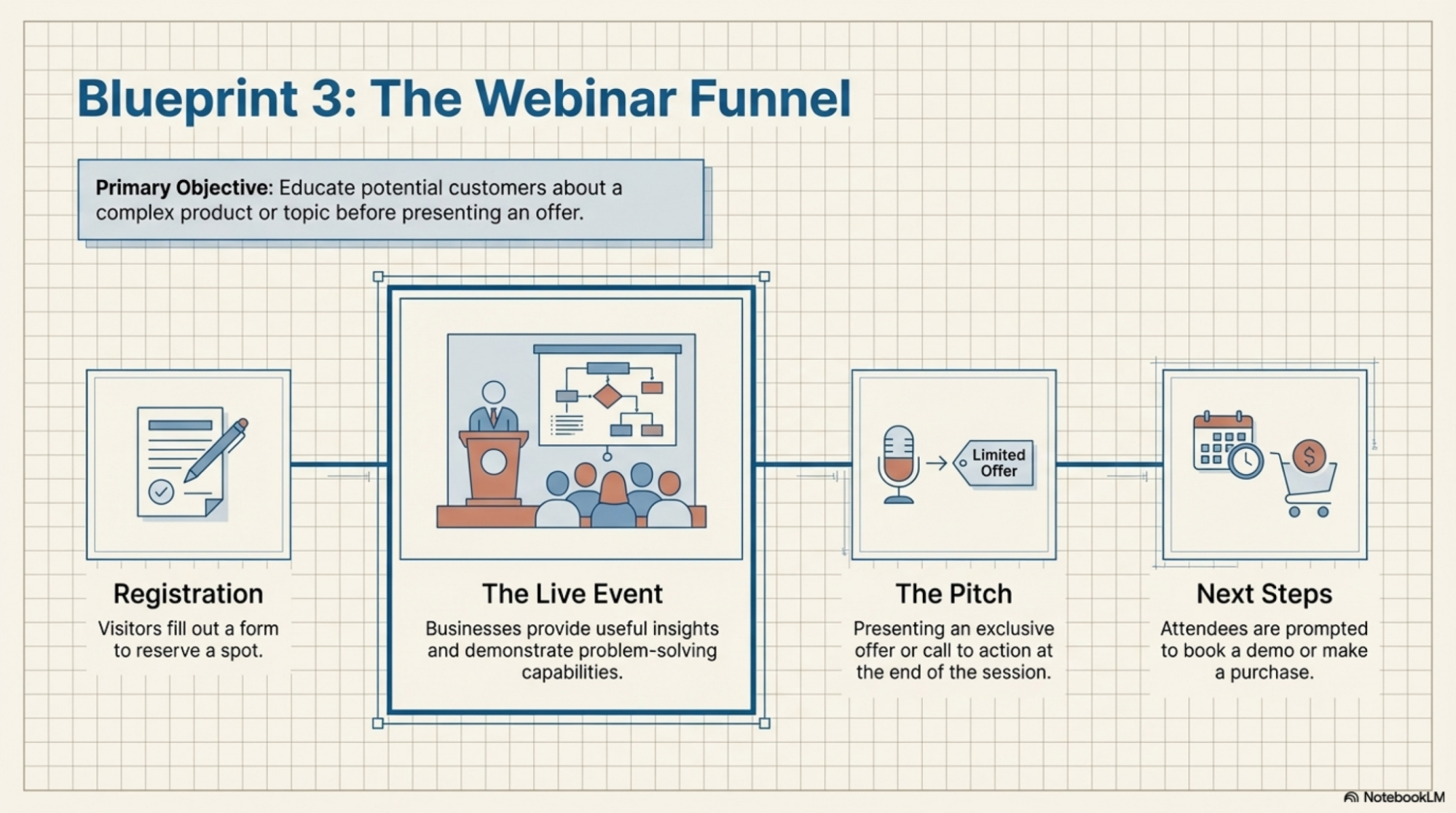
During the webinar, businesses provide useful insights and explain how their product or service can solve a problem. At the end of the session, they present an offer or encourage attendees to take the next step, such as booking a demo or making a purchase.
4. Product Launch Funnel
The product launch funnel is used when introducing a new product or feature to the market. It focuses on building anticipation before the actual launch.
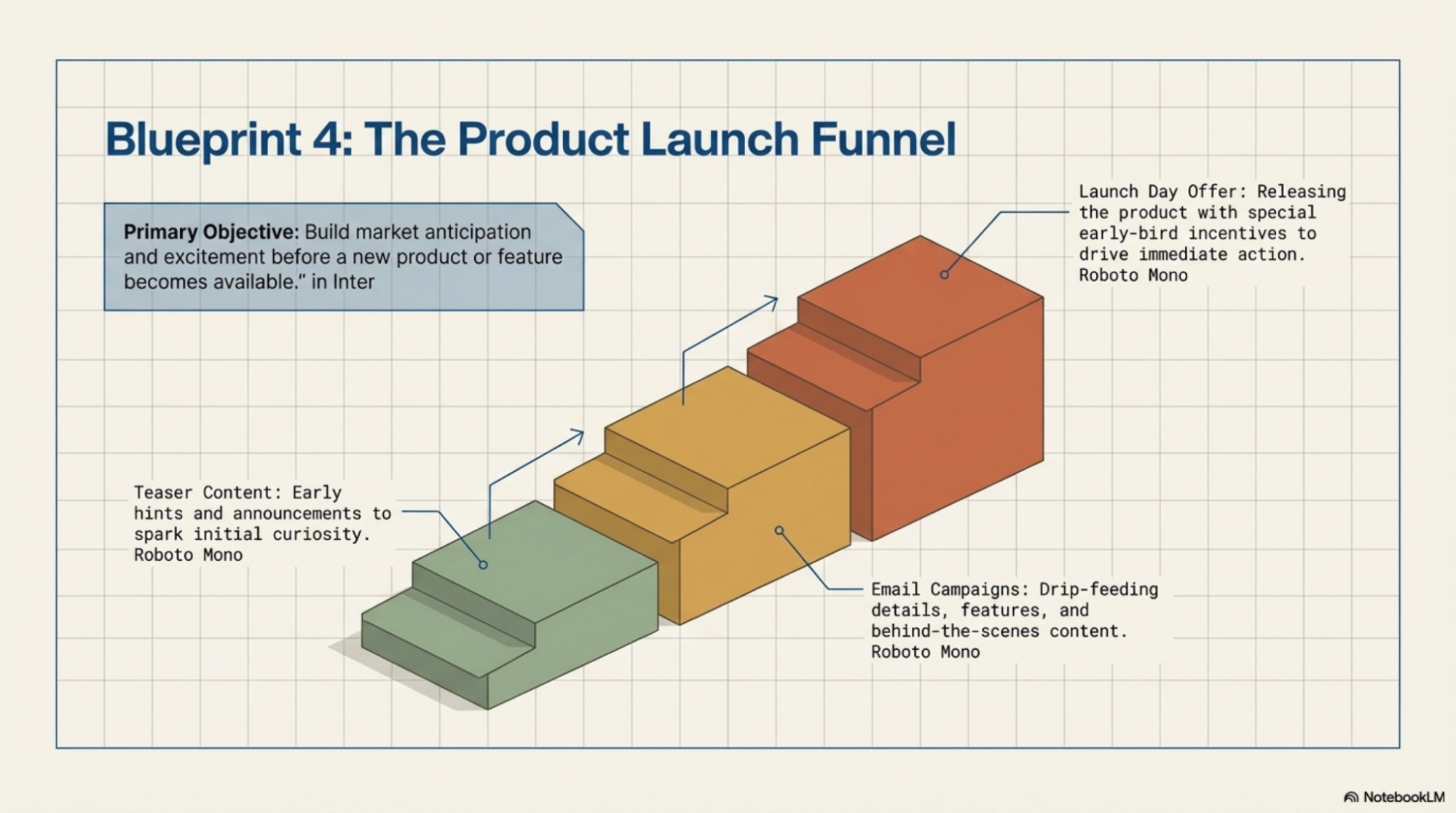
This funnel usually includes teaser content, early announcements, email campaigns, and special launch-day offers. The goal is to create excitement and encourage potential customers to take action once the product becomes available.
5. Tripwire Funnel
The tripwire funnel starts with a very low-cost offer designed to turn visitors into first-time customers. This small purchase reduces hesitation and helps build trust with the buyer.
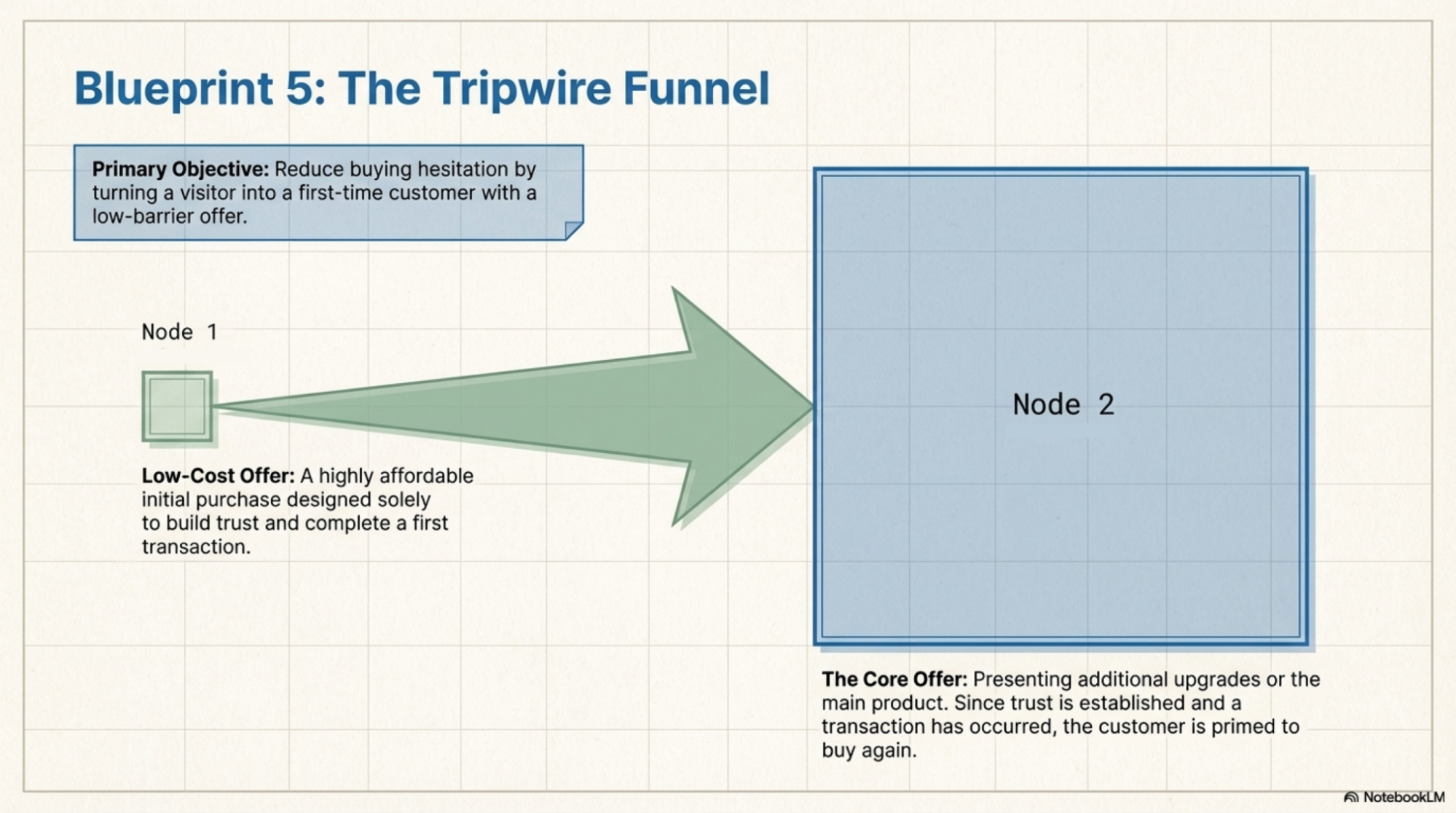
Once customers make the initial purchase, businesses present additional offers or upgrades. Since the customer has already completed one transaction, they are often more open to buying again.
6. Upsell Funnel
The upsell funnel focuses on increasing the value of an existing purchase. After a customer buys a product, they are shown related items, upgrades, or premium versions of the product.
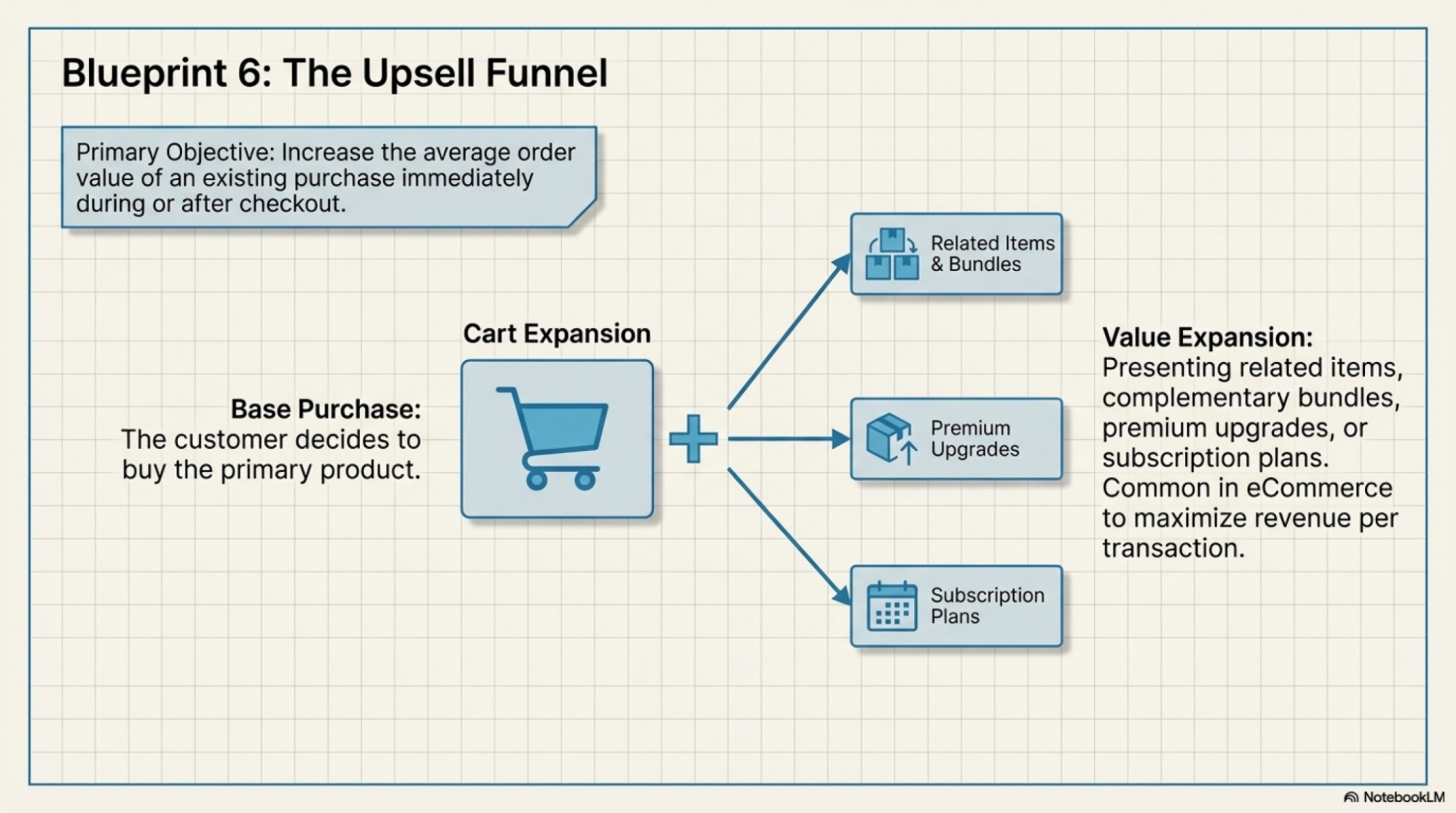
This strategy is common in eCommerce stores where customers are offered complementary products, bundles, or subscription plans during checkout or immediately after the purchase. It helps businesses increase revenue while also providing customers with additional value.
UI/UX Examples of Sales Funnel Templates
Following examples are UI design sales funnel templates. Each template is designed as a single-page layout that visually represents the structure of a sales funnel. Instead of multiple pages, all important sections such as product highlights, benefits, offers, and call-to-action areas are organized on one page.
This makes it easier for visitors to quickly understand the offer and move toward the final action.
Below are some examples of single-page UI sales funnel templates created for different industries and product types.
1. Pet Shop Sales Funnel Template
The Pet Shop template is a single-page funnel design created for online pet stores or pet-related businesses. The page layout usually includes sections for featured pet products, product benefits, customer reviews, and promotional offers.
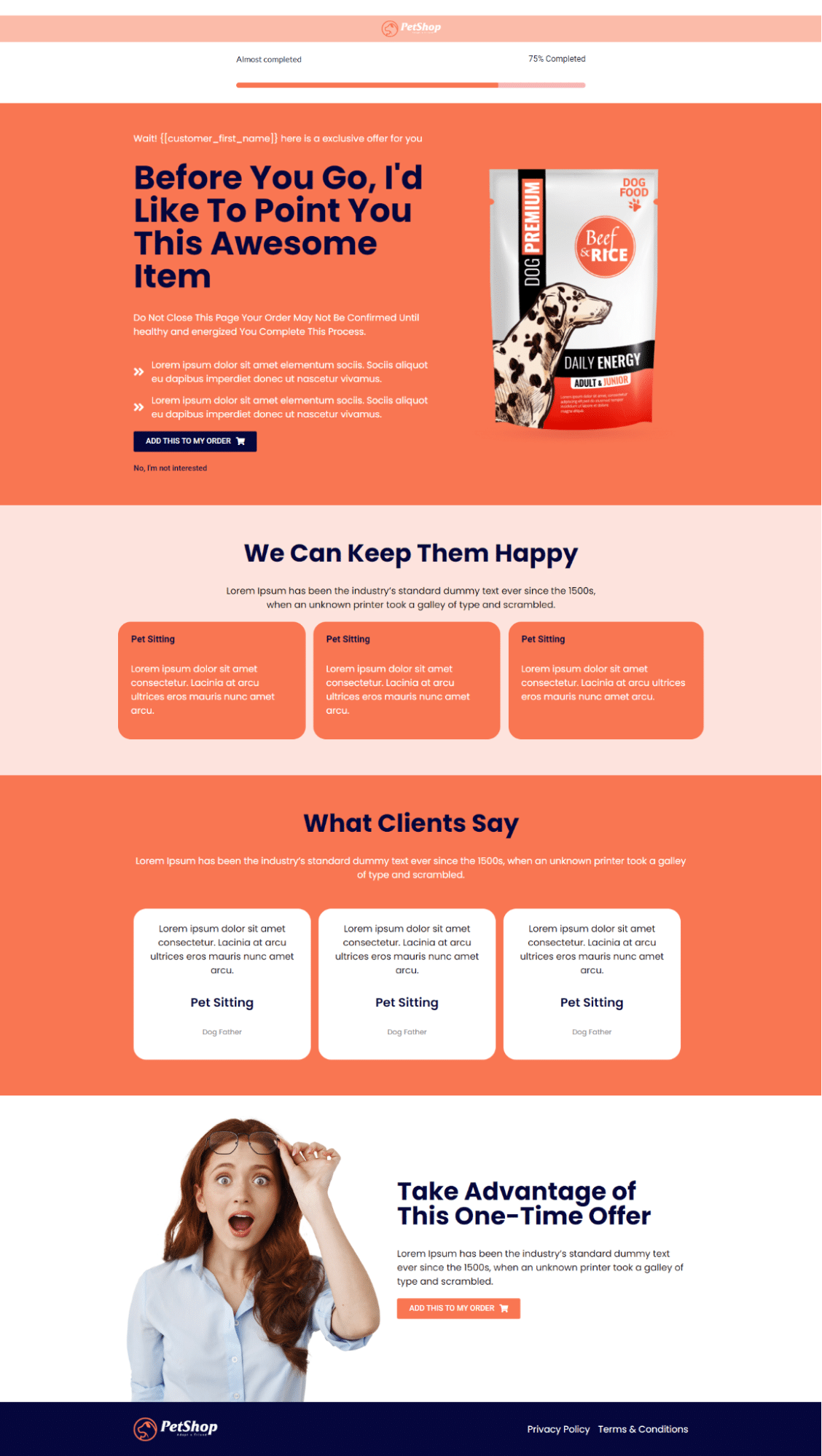
Since it is a single-page funnel, visitors can scroll through product highlights, explore pet accessories or food options, and directly move to the purchase section without navigating to multiple pages.
2. Fitness Sales Funnel Template
Fitness template is designed for gyms, trainers, or fitness brands offering workout programs and health-related products. The single-page structure typically includes sections for program details, benefits, trainer introductions, testimonials, and pricing plans.
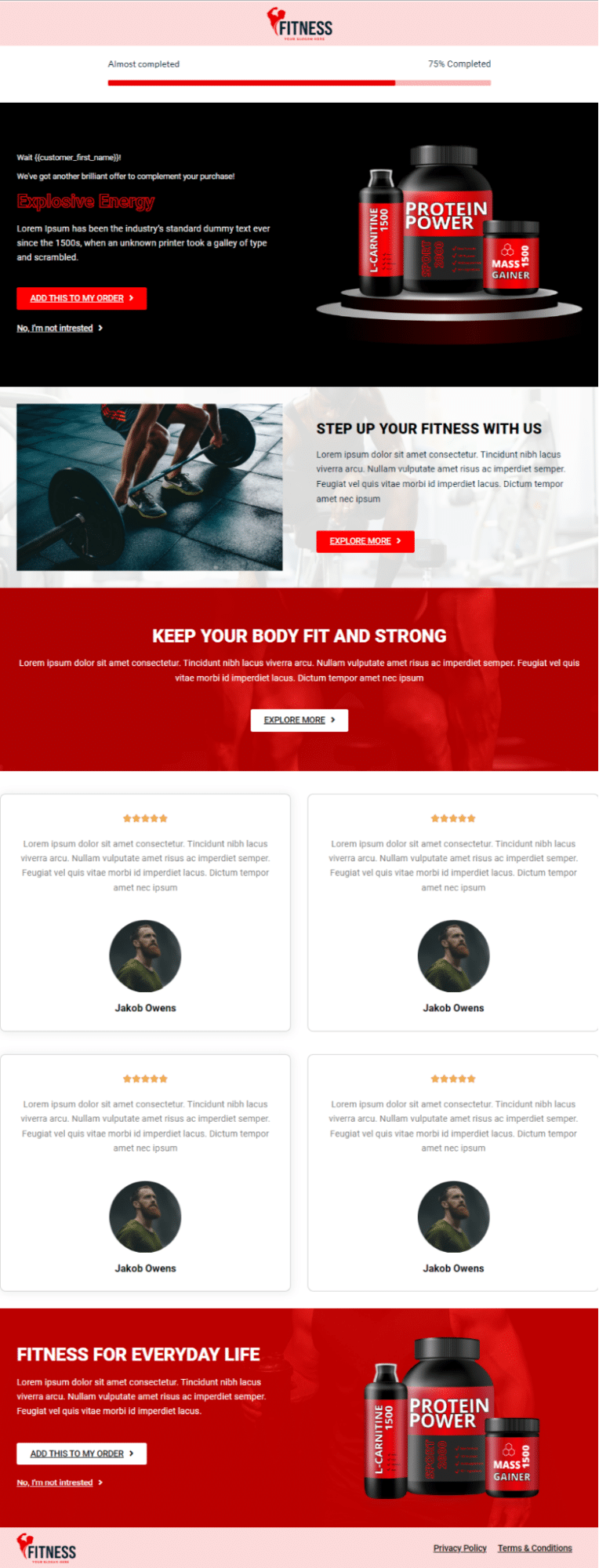
This layout allows visitors to quickly understand the fitness offer, see success stories, and sign up for a program or purchase a plan from the same page.
3. Beauty and Makeup Sales Funnel Template
Beauty and Makeup template is built for cosmetic brands and beauty product sellers. This single-page design usually includes product highlights, makeup or skincare benefits, product images, customer reviews, and special offers.
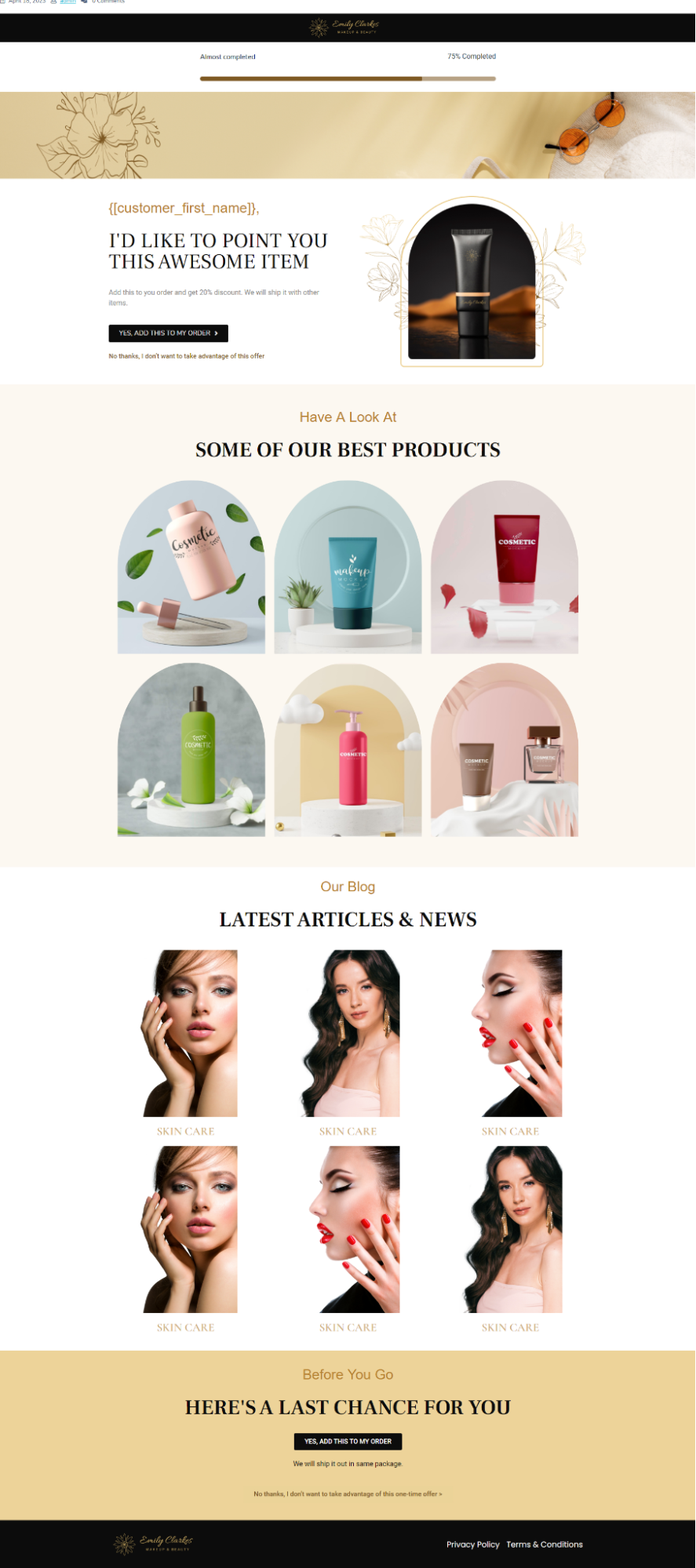
All the important information is arranged in a clear flow so visitors can learn about the product and proceed to the purchase section without leaving the page.
4. Single Beauty Product Sales Funnel Template
This one is a single-product funnel design focused on promoting a skincare or cosmetic product. The single-page layout usually highlights the product’s features, ingredients, usage benefits, and customer feedback.
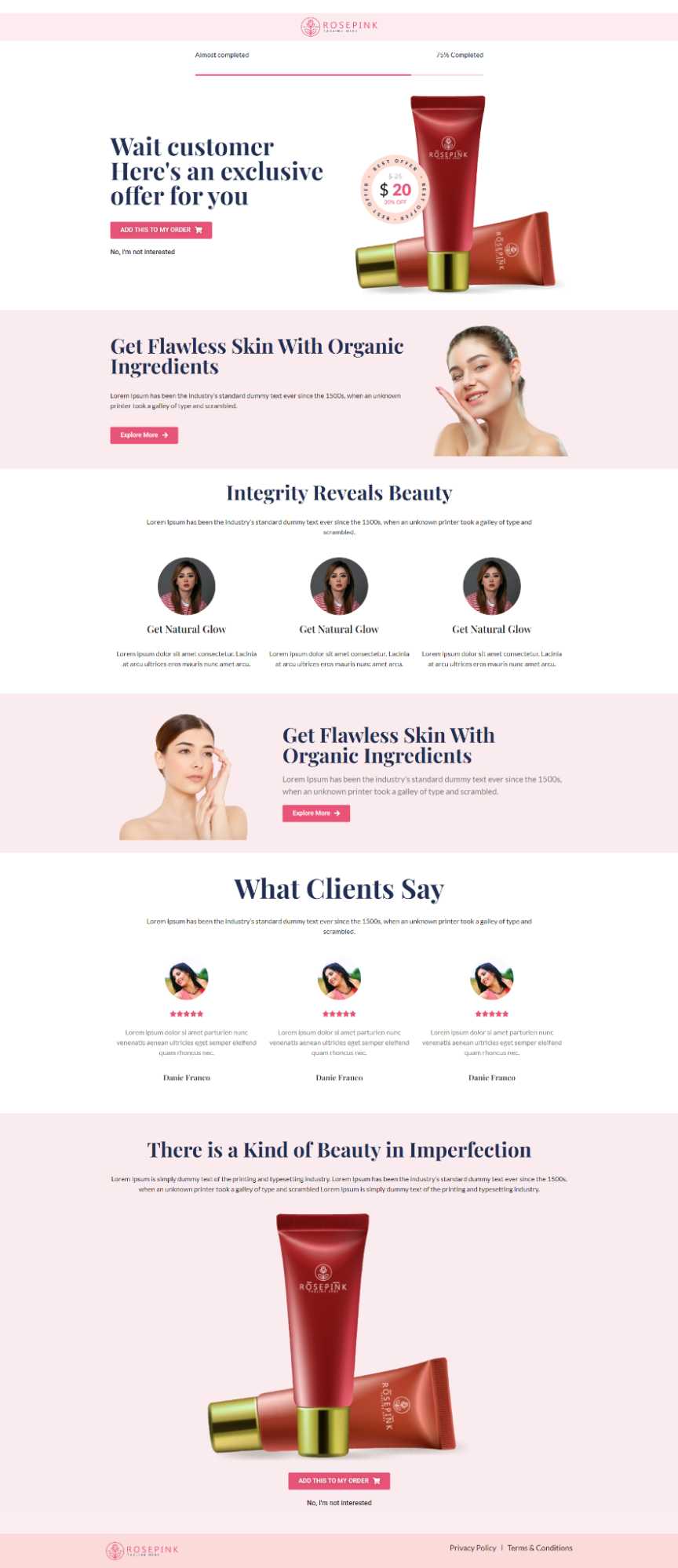
Visitors can scroll through product details, view visuals of the cream, and reach the purchase section in a smooth flow, making it easier to guide them toward completing the order.
Another benefit of using a sales funnel template is that it saves time and reduces guesswork. Once a working structure is in place, businesses can reuse it for different campaigns, products, or promotions while simply adjusting the content or offers to fit their goals.
For businesses running their websites on WordPress, a WordPress sales funnel setup makes this process even easier by allowing marketers to build, test, and optimize funnel stages directly within their site without relying on multiple external tools.
All these templates are available in our Upsell Plugin
Conclusion
A sales funnel helps businesses understand how potential customers move from discovering a product to finally making a purchase. Instead of leaving this journey unstructured, using a sales funnel template makes it easier to plan the steps that guide visitors toward taking action.
In this article, we looked at what a sales funnel template is and how it provides a clear framework for organizing marketing and sales activities. We also discussed the four main stages of a sales funnel: awareness, interest, decision, and action, each playing an important role in turning visitors into customers.
We then explored some of the most commonly used sales funnel templates, which businesses can use depending on their goals and sales process. Finally, we reviewed several single-page UI sales funnel templates designed for different industries such as pet stores, fitness brands, beauty products, and creative services.
Choosing the right funnel structure and design can help businesses present their offers more clearly and guide visitors through the buying process in a simple and organized way. With the right template, businesses can focus on improving their message, offers, and customer experience while maintaining a clear path that leads to conversions.
About the Author: Mohd Talib