

In this fiercely competitive environment, the sole purpose of every business is to generate more revenue. Businesses end up spending thousands of dollars on marketing, advertising, and other activities, sending customer acquisition costs through the roof. But there’s another way to boost revenue without spending much – merchants can increase average order value.
What does it mean when a business tries to increase average order value? Businesses can provide more value to their existing customers while generating more revenue on every sale.
Using the right strategies to increase your average order value, nudge customers to buy more products, and generate more sales from each order.
In A Hurry? Here’s A Brief Summary…
- The global benchmark for eCommerce sits approximately at $150. This can vary by industry, region, and the device used during the transaction.
- It was observed that when merchants set a minimum spend for free shipping, they saw 30% increase in order value after implementation.
- 58% customers admit that they add extra items to their cart to get free shipping.
- Members of loyalty programs typically show a 40% increase Average Order Value as compared to non-members.
- Product Recommendations increase a session’s AOV by as much as 369% compared to sessions without any recommendation interaction.
- The functionality of “Buy Now Pay Later” increase Average Order Value by up to 40%.
- A one-click checkout solution can increase consumer spending by 28.5%, as the ease of purchase encourages more frequent and larger orders.
- Incorporating Smart User Experience (especially cart layout and checkout upsells) directly influences Average Order Value, particularly on mobile.
In this article, we will deep dive into what the average order value is, how to calculate the average order value, ways to increase average order value, and the primary difference between Average Order Value and Customer Lifetime Value.
In This Blog, We Will Talk About…
(Jump to the section that interests you the most!)
What is Average Order Value?
Average order value means the average of each dollar spent when a customer places an order on your eCommerce website. To calculate your eCommerce store’s average order value, merchants can simply divide total revenue by the number of orders.
For example, let’s say that in January, your eCommerce store’s sales were $31,000 and the store had a total of 1,000 orders. $31,000 divided by 1,000 = $31, so September’s monthly AOV was $31.
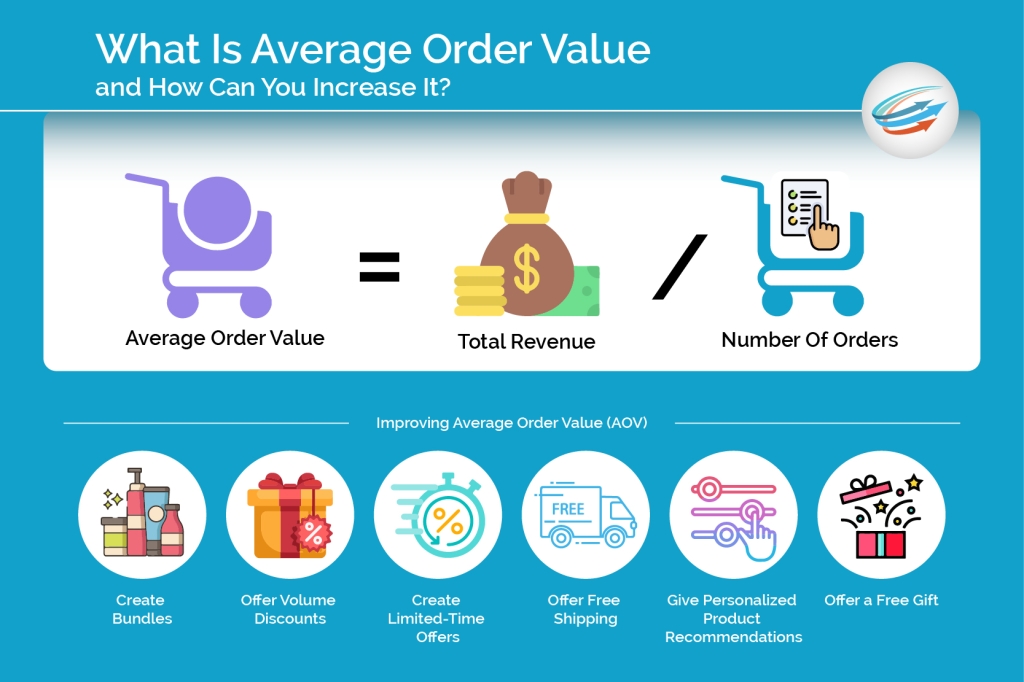
Understanding the Average Order Value helps you evaluate your overall online marketing efforts’ pricing strategy by giving you the metrics needed to measure the long-term value of individual customers.
An increase in Average Order Value matters because when your customers are buying more items or choosing higher-priced products, it directly improves revenue without extra burden on customer acquisition.
Why is it important to increase average order value?
- Directly helps in boosting sales. When merchants expand the average order value, they are selling more of their inventory.
- As the customers are seen buying more products, your revenue also increases over time. NOTE: It is important to note that just an increase in revenue doesn’t mean your profits are also increasing; carefully evaluate your pricing strategies as well.
- Measuring Average Order Value helps in understanding the customer behaviour and purchasing patterns. This, in return, helps in introducing strategies around the customer insights.
- For online retailers, processing one large order is more sustainable than multiple small orders.
Businesses are seen actively incorporating strategies to increase average order value, tactics like product recommendations, product bundles, free shipping, tiered discount rules, loyalty programs, and many more. Each of these strategies is designed with one common goal – to encourage customers to spend more per transaction while maintaining a smooth customer experience.
6 Proven Strategies To Increase Average Order Value
If you are a merchant or someone tired of being asked how the team plans to increase average order value, without blowing up acquisition spend in every board meeting, this section is for you.
Before blindly implementing any of the strategies, carefully analyse your data to find out why your AOV is low in the first place. From there, merchants can choose the most suitable strategy. Also, do not apply all these tactics at once, as you won’t know what is giving you results and what isn’t. This enhances your overall revenue and helps you create a more scalable business model. Especially in the case of WooCommerce stores, where on-site optimisation and trial & error play a crucial role.
1. Upselling Techniques
Upselling Techniques are not about pushing people to buy things they do not want. At their best, they help customers make better decisions by showing options they might have missed.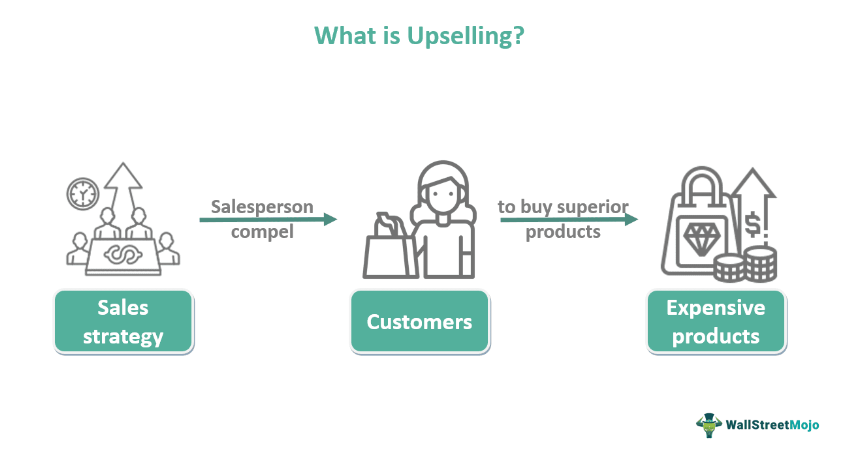
When done right, upselling feels helpful, not salesy. This strategy is responsible to increase average order value, and also improving the overall buying experience.
Although the term “upselling” might evoke thoughts of pushy salespeople aiming to extract more money from customers to increase average order value. In reality, it’s a potent and valid sales tactic that can strengthen customer connections, elevate the overall customer journey, and boost revenue.
Let us understand what upselling means with an example: you visit Amazon to buy the iPhone 12 Pro 128 GB variant.
Suppose you added the product to the cart and scroll down a bit further on the page, you’ll find a section where you’ll find a comparison of the recent purchase with all the upgrades.

The “similar items” section is the place where you see upselling offers, and as a result, the customers can upgrade their purchase. In simple words, Amazon is trying to make you spend more on the same item to increase average order value.
Tools To Implement This Strategy
To successfully implement upselling techniques, merchants can use tools to create targeted upsell funnels. Upsell Funnel Builder allows merchants to create post-purchase and checkout upsell offers that are relevant to the customer’s purchase journey, increasing average order value without friction in the customer’s shopping experience.
2. Offer Free Shipping
Setting a free shipping threshold is another powerful psychological trigger to directly increase average order value. How? This encourages the customers to spend more to unlock a benefit. By setting a minimum cart value to avail free shipping (for instance, “free shipping on orders above $20), merchants create a clear incentive for customers to add extra items to their cart.
There are many ways to display how close the customers are to adding more items to their cart. Merchants can do this by adding a progress bar or through a dynamic message. This further nudges them to increase their order value, which directly increases average order value.
3. Cross-sell Complementary Items
It is the technique of selling an additional product or service to an existing customer at the time of shopping. Cross-selling is used to gain more revenue by showing products related (variable product) to the purchased product (parent product) to the current customers, and also to increase average order value.
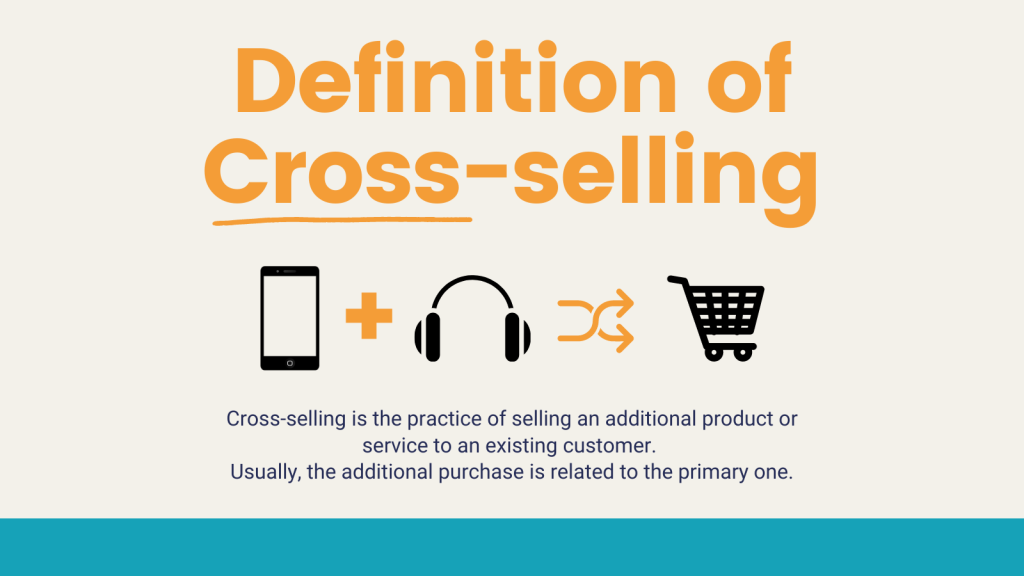
When effectively executed, cross-selling proves mutually advantageous for both you and your customers. The optimal scenario arises when an existing customer remains unaware of a product or service that could enhance their experience. Discovering this opportunity aligns seamlessly with their customer journey, via their preferred communication channel, and elicits a positive response, resulting in their adoption of the suggested offering.
For Example, if a customer purchases home decor items or wall art from an online store, cross-selling can recommend complementary products such as frames, decorative lighting, or personalised photo displays like wallpics to enhance the overall aesthetic of the space.
4. Create Product Bundles
This is another psychological trick to increase average order value. The user’s decision-making process becomes increasingly difficult with each step they take. Creating product bundles streamlines the purchasing process.
Bundle Pricing, or bundling your products, is a smart move for increasing average order value online.
Here is an example: WP Swings has cleverly segregated the plugins into different bundles.
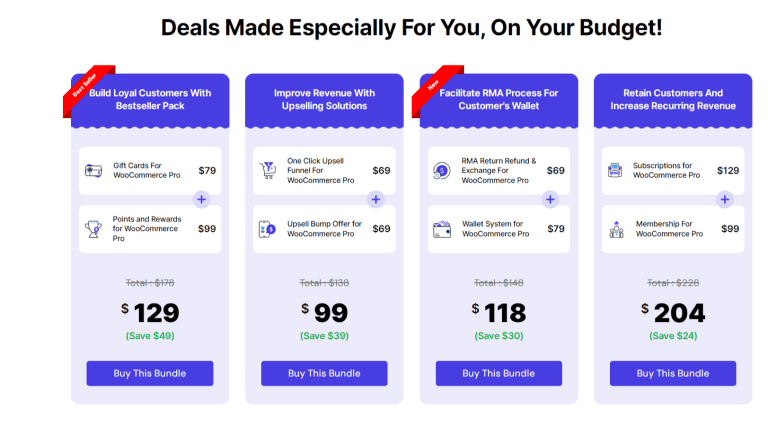
It saves shoppers’ time, and the brand doesn’t have to show multiple upselling and cross-selling offers for different products.
The chances that a customer will buy a bundle of products are dramatically high, and on the brighter side, your offers are less aggressive and more relevant.
5. Create A Loyalty Program
This is one of my favourite strategies to increase average order value. There is a saying, “Customer is King”, which highlights that customers are the primary source of revenue and should be the central focus of business strategy.
A Customer Loyalty Program is a connection between a brand and a customer. When the company offers exclusive products, offers, discount coupons, promotions, or pricing, and in return, the customer agrees to “go consistent” with your brand through repeat purchases or engagement.
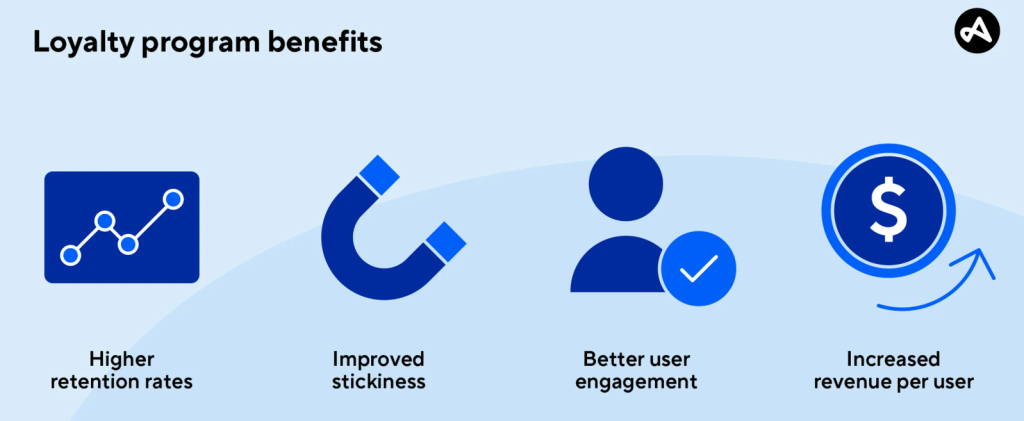
Customer loyalty is the outcome of a confident customer experience, consumer satisfaction, and the value of the product the customer receives when they transact.
These loyalty programs encourage customers to spend more by rewarding them with points, free shipping, or exclusive membership-tier offers based on their purchase value.
Tools To Implement This Strategy
Merchants can create dynamic loyalty programs. Points and Rewards for WooCommerce plugin runs on a simple mantra: assign points to your customers for each action they perform on your site. And the good part here is, you can decide on how you wish to reward your customers.
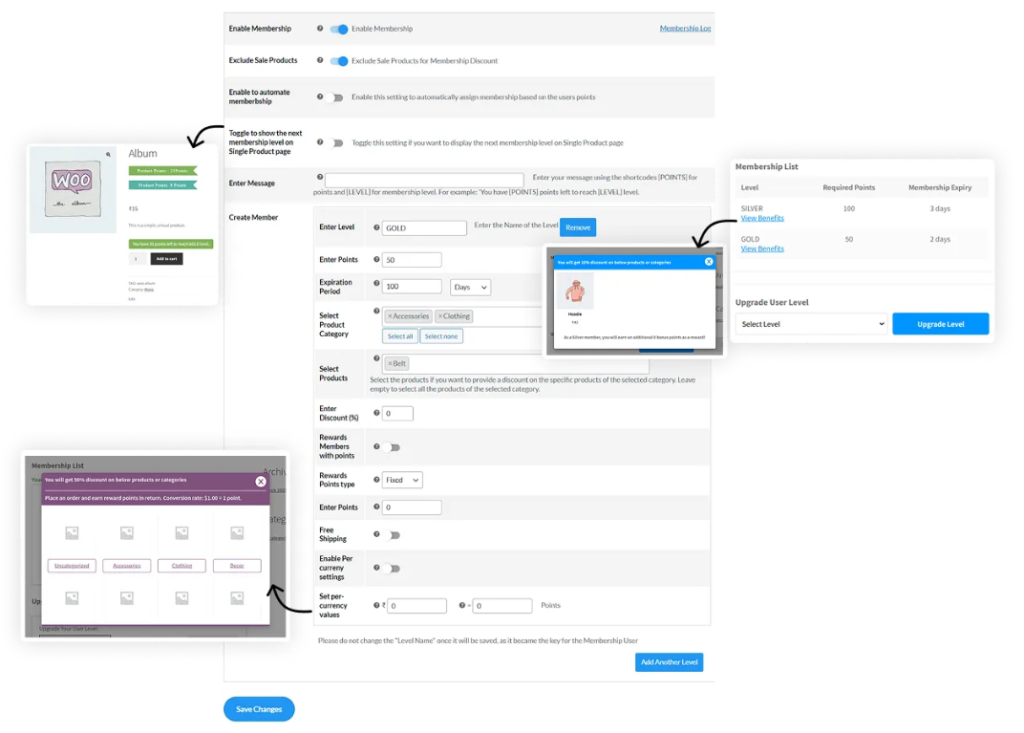
For example, merchants can also create multiple membership tiers, specify the number of Woo points to join, and set discounts and expiration dates. They can also award different WooCommerce loyalty points to customers based on their membership tier, while displaying a unique message showcasing the next membership level they can achieve. This is a clever functionality of the WooCommerce points and rewards plugin that increases average order value without any extra effort.
6. Product Recommendations
Let’s address this myth: “more traffic = more sales”. This definitely is not the case when it comes to increasing sales on your WooCommerce store; you don’t always need more traffic – you just need smarter product placements. Consider product recommendations to serve that purpose with complete ease.
The checkout page isn’t just the end of the sales cycle. Merchants should consider it as the perfect opportunity to increase average order value.
How? By utilising order bumps, you can showcase product recommendations at the most crucial moment: right before the customer clicks “Place Order.”
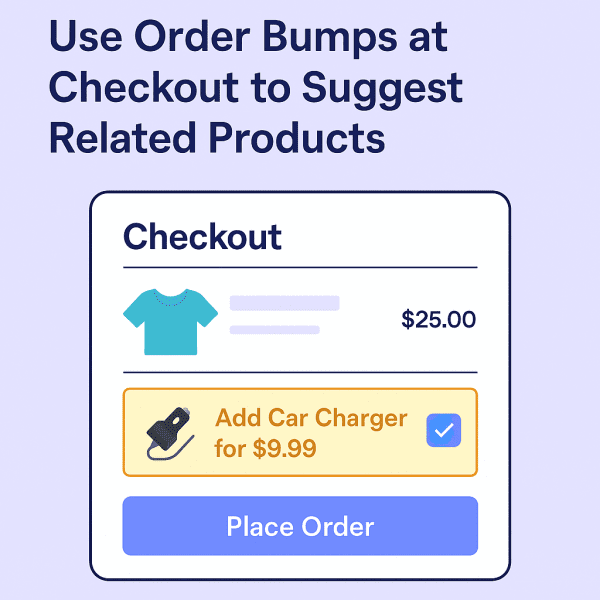
Order bumps are compact yet high-converting offers that appear on your checkout page (or wherever you want to display them). These bump offers need to be less complicated, like you can offer a phone case while someone purchases a smartphone. This suggestion feels helpful, rather than pushy, especially because they are well-matched to what’s already in the cart.
Tools To Implement This Strategy
With Upsell funnel builder, you can easily select product-specific or category-based related items to appear as bump offers on the checkout page. The plugin also allows complete customisation, enabling you to tailor the offer text, layout, discount, and trigger rules according to your business requirements. Placing the WooCommerce-related products here, where the customer is most likely to spend. Merchants can increase the chances of a quick add-on without causing much friction.
The results? Significantly higher average order value, and a smoother path to checkout success.
How Is Customer Lifetime Value Different From Average Order Value?
This is where many businesses get confused. Average Order Value and Customer Lifetime Value are both revenue metrics, but they are operated on completely different levels of analysis. Customer Lifetime Value, or popularly known as CLV, measures the total revenue a customer generates for your business over the entire period of their relationship with your brand.
Basic Formula (Revenue-based):
Customer Lifetime Value = Average Order Value (AOV) X Purchase Frequency X Customer Lifespan
For example: A customer’s Average Order Value (AOV) is $50, Purchase Frequency is 2 (orders/year), and Lifespan is 3 years.
CLV = $50 X 2 X 3 = $300.
Average Order Value (AOV), on the other hand, means the average amount a customer spends in a single transaction. In a nutshell, it’s a short-term transactional metric to help merchants understand how much revenue each order generates.
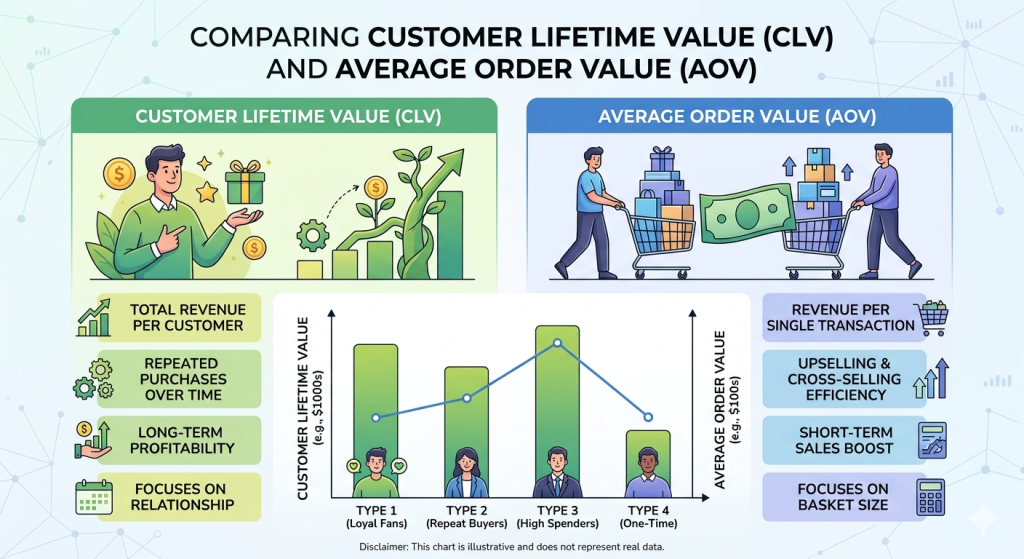
- Customer Lifetime Value tells you how much a customer is worth over time, while Average Order Value tells you how much a customer spends per order.
- CLV is about maximising the overall customer relationship with a brand, while AOV is about maximising individual customers’ transactions with the brand.
- When merchants increase Average Order Value, they can directly increase the Customer Lifetime Value. But CLV also heavily depends on how often customers return and continue purchasing from their WooCommerce store.
Over To You
As merchants can see, there are many strategies to increase average order value. But as a brand, your utmost priority should be to provide an excellent customer experience.
Why? Once a customer starts trusting your brand, everything else starts flowing without much effort. All the mentioned strategies, in a way, help merchants to create an unforgettable shopping experience for their customers.
Happy Selling!
Frequently Asked Questions
1. What does it mean to increase average order value?
Average order value means the average of each dollar spent when a customer places an order on your eCommerce website. Understanding the Average Order Value helps you evaluate your overall online marketing efforts’ pricing strategy by giving you the metrics needed to measure the long-term value of individual customers.
2. How is AOV calculated?
To calculate your eCommerce store’s average order value, merchants can simply divide total revenue by the number of orders.
For example, let’s say that in January, your eCommerce store’s sales were $31,000 and the store had a total of 1,000 orders. $31,000 divided by 1,000 = $31, so September’s monthly AOV was $31.
3. Is high AOV good?
Yes, high AOV is good. Increasing the average order value is the most efficient way to boost profits without putting much burden on the customer acquisition rate. The global benchmark for eCommerce sits approximately at $150. This can vary by industry, region, and the device used during the transaction.
4. How to Improve AOV?
There are many strategies to increase average order value, such as implementing upsell and cross-selling techniques, offering free shipping, creating product bundles, creating loyalty programs, and making product recommendations.
About the Author: Muskaan Sabarwal