


A growing subscriber base may look impressive on paper, but it doesn’t always translate into sustainable growth.
If customers are cancelling subscriptions as quickly as you’re acquiring them, your recurring revenue, customer lifetime value, and profitability can suffer significantly.
For WooCommerce subscription businesses, churn is more than a cancellation metric.
It is a direct indicator of how well your products, pricing, customer experience, and subscription management strategies are performing.
Even a small improvement in retention can have a substantial impact on long-term revenue because existing subscribers typically generate more value than newly acquired customers.
Many merchants attempt to reduce subscription churn by offering occasional discounts or sending reminder emails.
In A Hurry? Here’s A Brief Summary…
Reducing subscription churn requires more than occasional discounts or reminder emails. The most effective approach is to identify why subscribers leave, address churn risks before cancellations occur, and continuously improve the customer experience. Businesses that focus on proactive retention strategies such as better onboarding, consistent value delivery, payment recovery, personalized engagement, and win-back campaigns can retain more subscribers and increase recurring revenue. Combining these efforts with AI-powered churn prediction helps merchants spot at-risk customers earlier, allowing them to take action before revenue is lost.
While these tactics can help, they rarely address the root causes behind customer cancellations. A more effective approach is to build a subscription retention framework that helps you identify churn risks early, understand why subscribers leave, and take action before cancellations occur.
In this guide, you’ll learn a practical subscription retention framework to reduce subscription churn in WooCommerce.
We’ll cover how to measure churn accurately, diagnose the reasons behind subscriber losses, prevent avoidable cancellations, recover at-risk customers, strengthen long-term retention, and win back former subscribers.
You’ll also discover how predictive tools such as AI-powered churn analysis can help you spot potential cancellations before they impact your recurring revenue.
Table Of Contents
- What Is Subscription Churn and Why Does It Matter?
- Phase 1: Measure Before You Try to Reduce Subscription Churn
- Phase 2: Diagnose Why Subscribers Leave
- Phase 3: Prevent Churn Before It Happens
- Phase 4: Recover Subscribers Showing Churn Signals
- Phase 5: Retain Subscribers for Long-Term Growth
- Phase 6: Win Back Lost Subscribers
- Building Your Subscription Churn Reduction System
- Final Words
- Frequently Asked Questions (FAQ’s)
What Is Subscription Churn and Why Does It Matter?
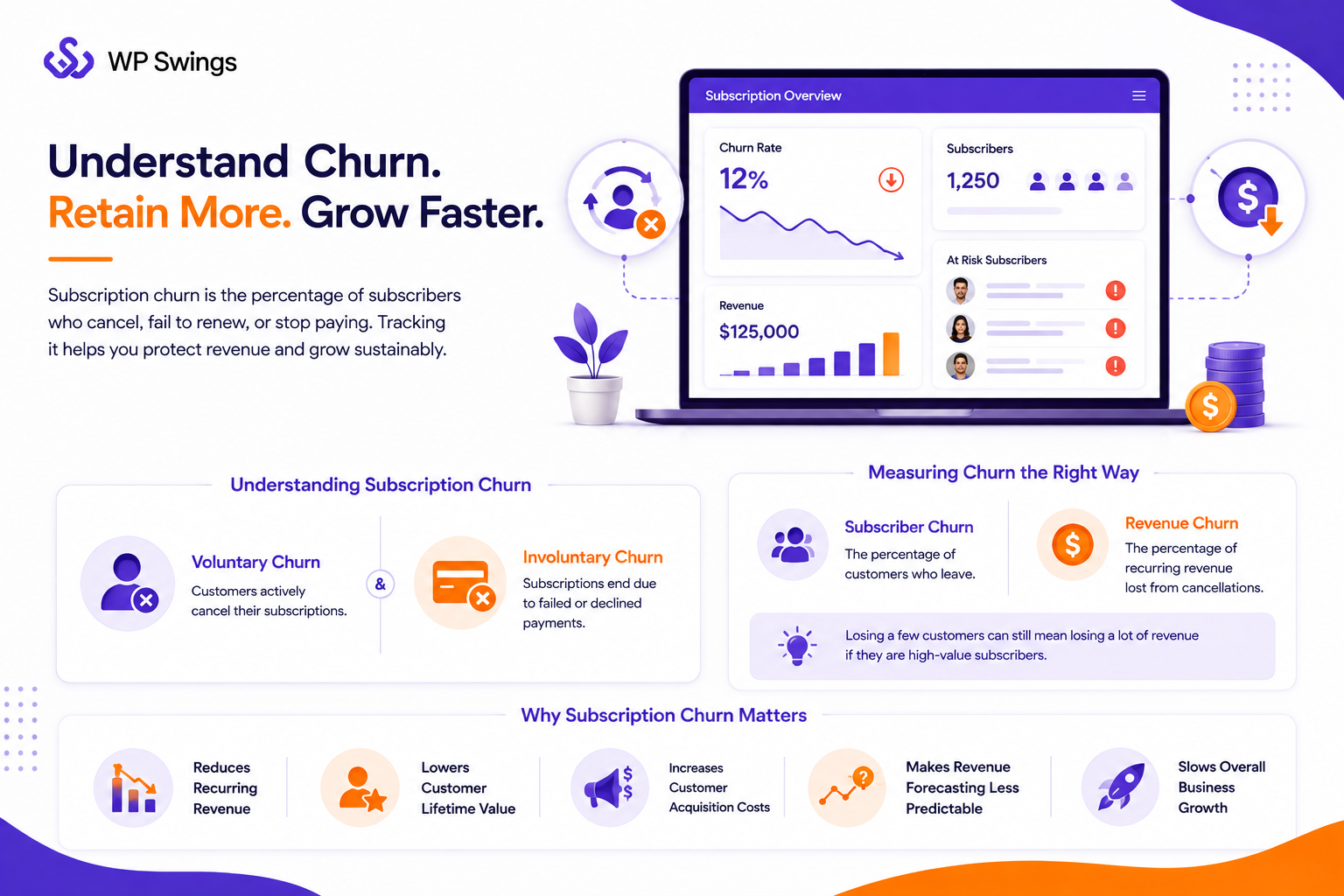
Subscription churn is the percentage of subscribers who cancel, fail to renew, or stop paying for a subscription during a specific period. It matters because churn directly impacts recurring revenue, customer lifetime value, and long-term business growth. .
To successfully reduce subscription churn, businesses must first understand what it is and why it happens.
For subscription-based WooCommerce stores, churn is one of the most important metrics to track. While acquiring new customers drives growth, retaining existing subscribers is often more cost-effective and profitable.
If customers are leaving faster than they’re joining, even strong sales numbers can mask underlying retention problems.
Understanding Subscription Churn
Subscription churn occurs whenever a customer ends their subscription, whether intentionally or due to issues such as failed payments. Every lost subscriber represents lost future revenue, making churn a key indicator of subscription business health.
There are two primary types of churn:
- Voluntary churn: Customers actively cancel their subscriptions.
- Involuntary churn: Subscriptions end because of failed or declined payments.
Why Subscription Churn Matters
High churn can affect your business in several ways:
- Reduces recurring revenue
- Lowers customer lifetime value (CLV)
- Increases customer acquisition costs
- Makes revenue forecasting less predictable
- Slows overall business growth
For example, if your WooCommerce store gains 100 new subscribers each month but loses 30 existing ones, a significant portion of your growth is being lost to churn.
Difference Between Subscriber Churn vs Revenue Churn
When measuring churn, it’s important to track both:
- Subscriber Churn: The percentage of customers who leave.
- Revenue Churn: The percentage of recurring revenue lost from cancellations.
A business may lose only a few customers but still experience significant revenue churn if those customers are high-value subscribers.
Phase 1: Measure Before You Try to Reduce Subscription Churn
Before you can reduce subscription churn, you need to know how serious the problem is. Many subscription businesses jump straight into retention campaigns, discounts, or win-back offers without understanding their actual WooCommerce subscription churn rate. As a result, they’re treating symptoms instead of addressing the root cause.
Measuring churn gives you a clear picture of subscriber behavior and helps you identify trends before they impact revenue. It also creates a baseline, allowing you to evaluate whether your retention efforts are actually working.
Which Churn Metrics Should WooCommerce Stores Track?
While there are dozens of subscription metrics available, a few key ones provide the insights needed to reduce subscription churn effectively.
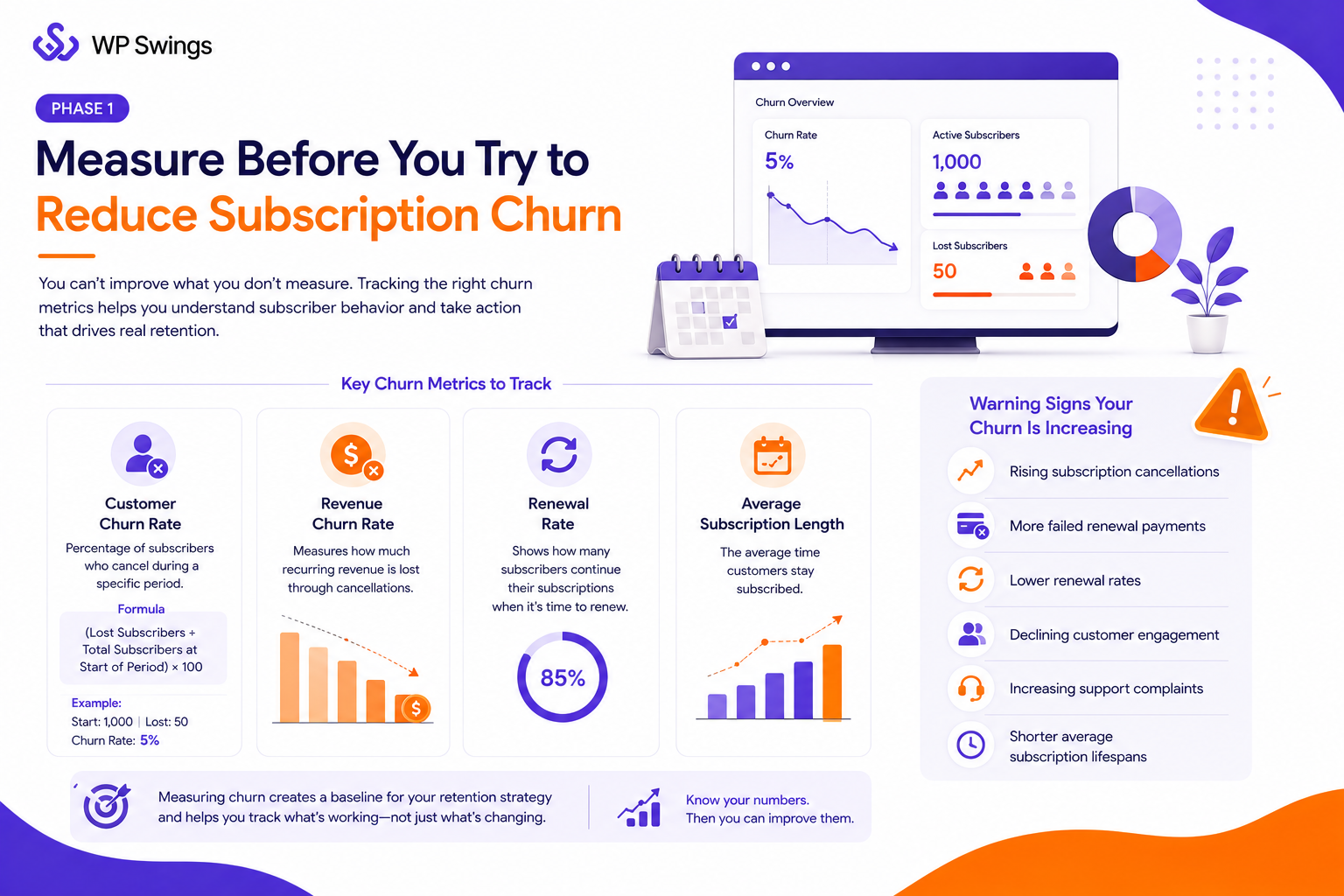
Customer Churn Rate
This measures the percentage of subscribers who cancel during a specific period.
Formula: Customer Churn Rate = (Lost Subscribers ÷ Total Subscribers at Start of Period) × 100
Example: If you start the month with 1,000 subscribers and lose 50, your churn rate is 5%.
Revenue Churn Rate
Not all subscribers contribute the same amount of revenue. Revenue churn measures how much recurring revenue is lost through cancellations. This metric is especially important for businesses with multiple subscription tiers.
Renewal Rate
Your renewal rate shows how many subscribers continue their subscriptions when it’s time to renew. A declining renewal rate is often an early warning sign that customer satisfaction or perceived value is decreasing.
Average Subscription Length
The longer customers stay subscribed, the healthier your subscription business becomes. Tracking average subscription duration helps you understand retention performance over time.
Warning Signs Your Churn Is Increasing
Even before churn becomes a major issue, there are usually warning signs.
Watch for:
- Rising subscription cancellations
- More failed renewal payments
- Lower renewal rates
- Declining customer engagement
- Increasing support complaints
- Shorter average subscription lifespans
If you notice several of these trends at once, it’s time to investigate further.
Phase 2: Diagnose Why Subscribers Leave
Once you’ve measured churn, the next step is understanding what’s causing it. You can’t effectively reduce subscription churn if you don’t know why subscribers are leaving in the first place.
Many merchants assume customers cancel because of price, but that’s often only part of the story.
In reality, churn usually happens when the value customers receive no longer matches their expectations. Identifying these friction points allows you to focus your retention efforts where they’ll have the biggest impact.
The Most Common Reasons Subscribers Cancel
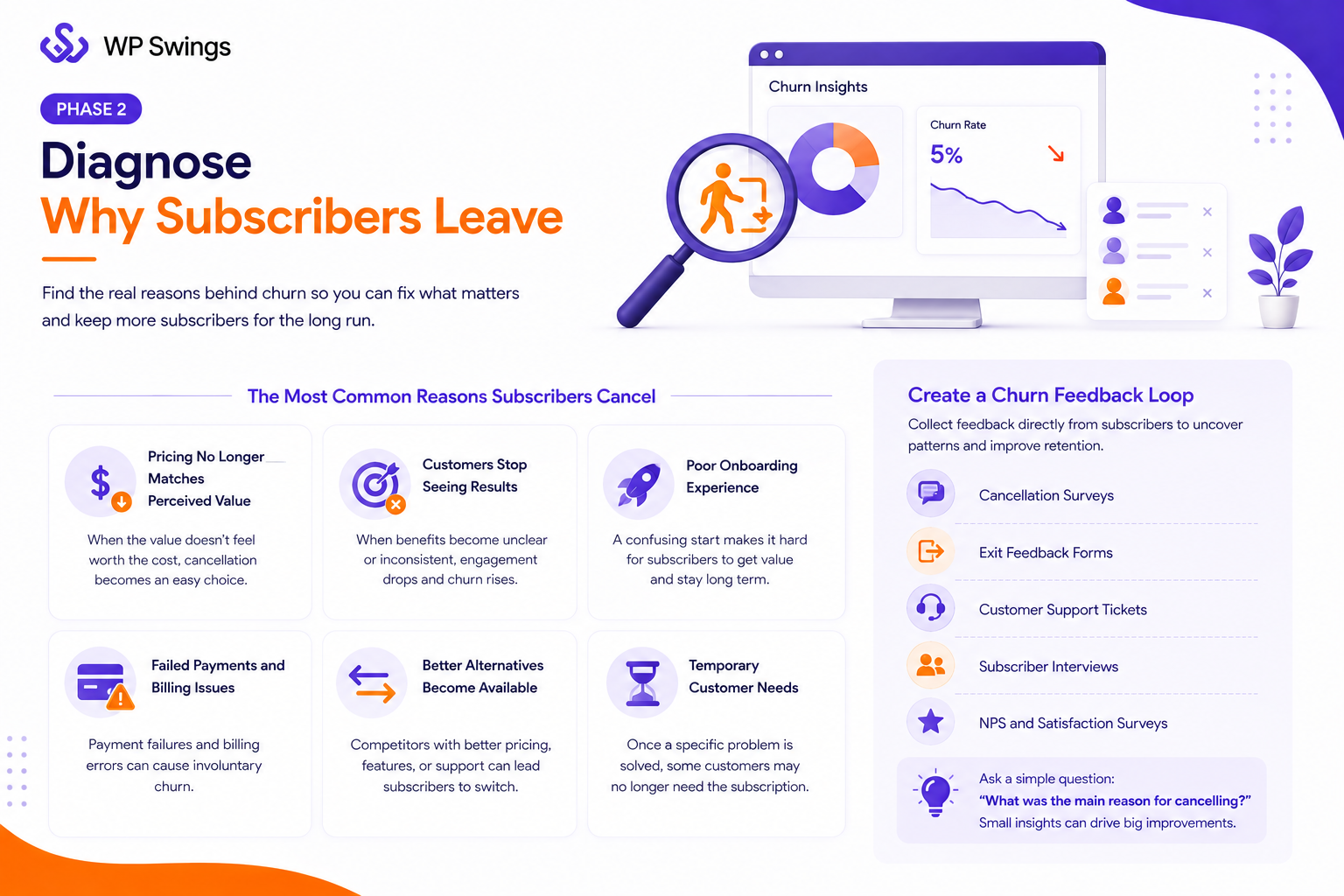
- Pricing No Longer Matches Perceived Value: Customers rarely leave because a product is expensive. They leave when they no longer believe the subscription is worth the cost. If subscribers don’t see ongoing value, cancellation becomes an easy decision.
- Customers Stop Seeing Results: Whether you sell products, memberships, courses, or software, customers need to experience consistent benefits. When those benefits become unclear or inconsistent, engagement drops and churn rises.
- Poor Onboarding Experience: The first few weeks of a subscription often determine whether a customer stays long-term. If subscribers struggle to get started, understand features, or achieve quick wins, they are more likely to leave early.
- Failed Payments and Billing Issues: Not every cancellation is intentional. Expired cards, payment failures, and billing errors can result in involuntary churn, causing businesses to lose subscribers who may have otherwise remained customers.
- Better Alternatives Become Available: Customers continuously compare products and services. If competitors offer better pricing, features, support, or flexibility, some subscribers may switch.
- Temporary Customer Needs: Sometimes customers subscribe to solve a specific problem. Once that need is met, they may no longer see a reason to continue paying.
Create a Churn Feedback Loop
Instead of guessing why subscribers leave, collect direct feedback whenever possible.
Useful sources include:
- Cancellation surveys
- Exit feedback forms
- Customer support tickets
- Subscriber interviews
- NPS and satisfaction surveys
Even a simple question like “What was the main reason for cancelling?” can reveal patterns that help you reduce subscription churn over time.
Phase 3: Prevent Churn Before It Happens
The best way to reduce subscription churn is to prevent avoidable cancellations before they happen. Once you’ve identified why customers leave, turn those insights into proactive retention strategies that keep subscribers engaged and continuously remind them of the value they’re receiving.
Improve Subscriber Onboarding
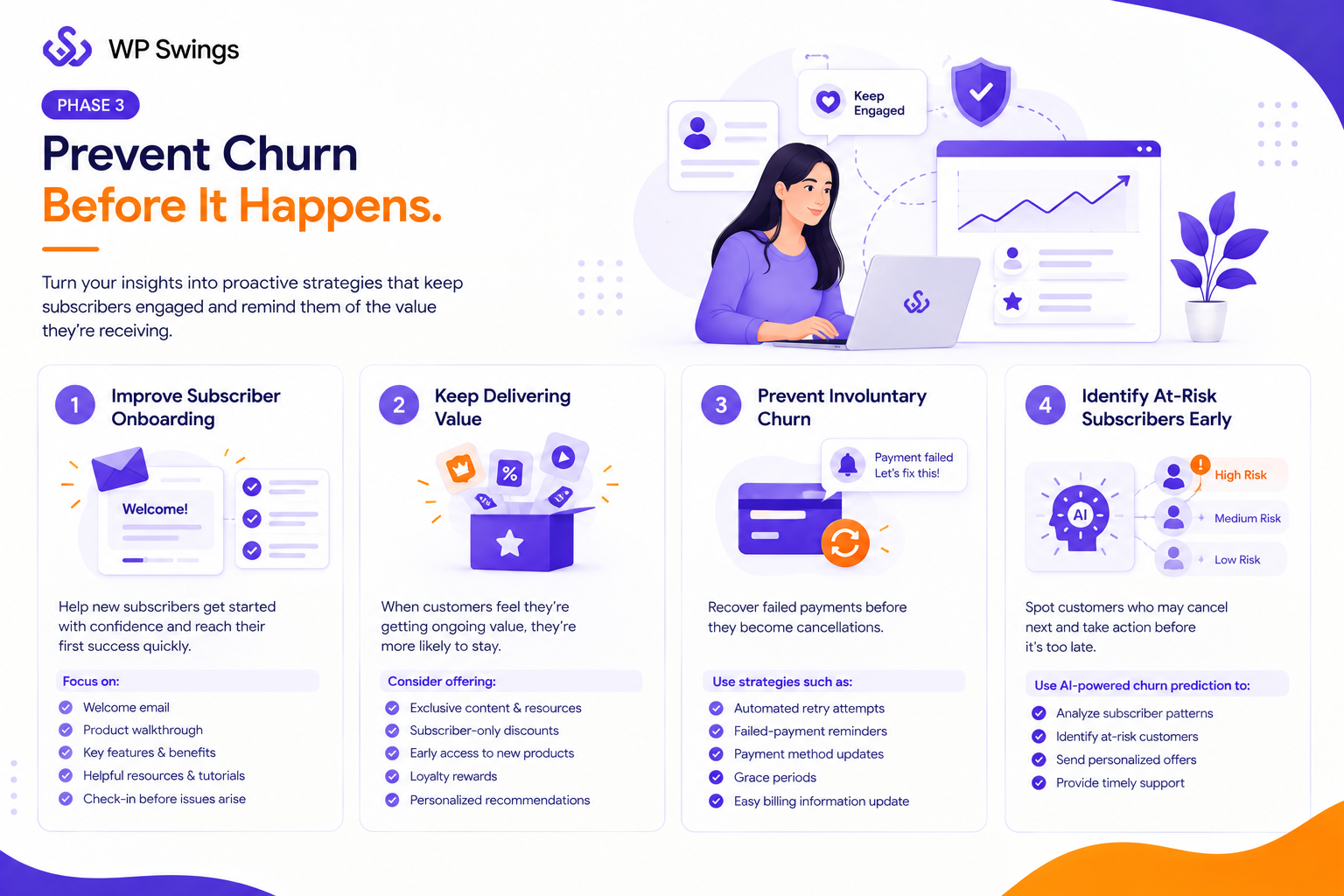
The first few weeks can strongly influence whether a customer becomes a long-term subscriber. A smooth onboarding experience helps customers understand your product, reach their first success quickly, and know where to get help.
Focus on:
- Sending a clear welcome email
- Showing customers how to use the product
- Highlighting important features and benefits
- Providing helpful resources and tutorials
- Checking in before potential problems become cancellations
Keep Delivering Value
Customers are more likely to stay when they consistently feel they’re getting value from their subscription. Don’t let the relationship become purely transactional after the initial purchase.
Consider offering:
- Exclusive content or resources
- Subscriber-only discounts
- Early access to new products
- Loyalty rewards
- Personalized recommendations
Regularly communicating these benefits can strengthen engagement and help reduce subscription churn.
Prevent Involuntary Churn
Some subscribers don’t actually want to cancel but are lost because their renewal payment fails. Recovering these payments can be one of the simplest ways to reduce subscription churn.
Use strategies such as:
- Automated payment retry attempts
- Failed-payment reminders
- Payment method update requests
- Grace periods before cancellation
- Easy ways to update billing information
Identify At-Risk Subscribers Early
Traditional churn analysis often tells you what’s already happened. A proactive approach looks for customers who may be likely to cancel next.
This is where AI-powered churn prediction can help. By analyzing subscriber patterns and identifying customers at higher risk, merchants can intervene with personalized offers, support, or engagement campaigns before cancellation occurs.
How WPSwings Can Help
Instead of waiting for subscribers to cancel, you can use these insights to take action earlier and reduce subscription churn.
Phase 4: Recover Subscribers Showing Churn Signals
Not every at-risk subscriber is destined to cancel. If you identify warning signs early, you have an opportunity to intervene and reduce subscription churn before the customer leaves.
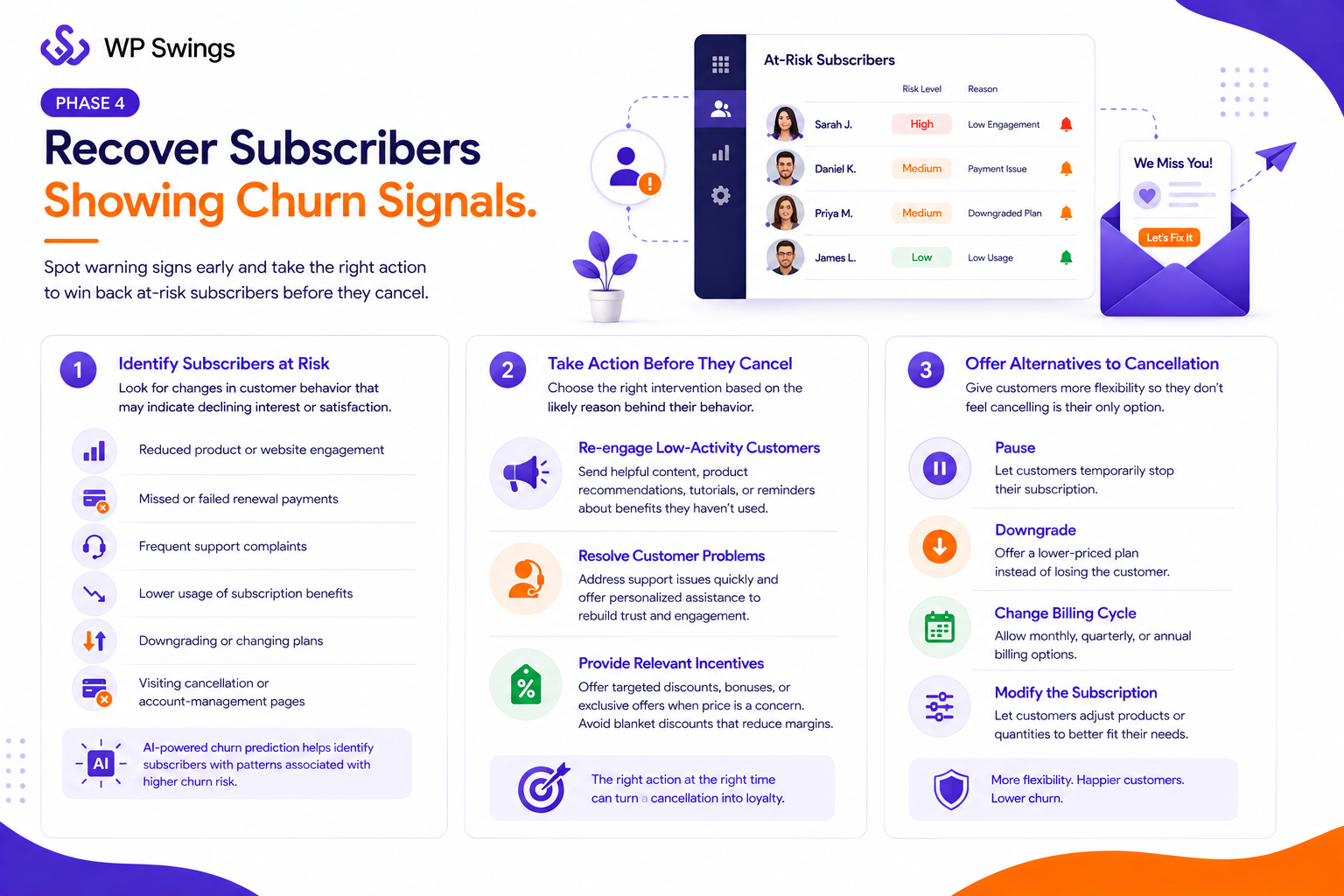
The key is to avoid treating every subscriber the same. A customer with a failed payment needs a different approach from someone who has stopped using your product or is considering a cheaper alternative.
Identify Subscribers at Risk
Look for changes in customer behavior that may indicate declining interest or satisfaction, such as:
- Reduced product or website engagement
- Missed or failed renewal payments
- Frequent support complaints
- Lower usage of subscription benefits
- Downgrading or changing plans
- Visiting cancellation or account-management pages
AI-powered churn prediction can make this process easier by helping identify subscribers who show patterns associated with higher churn risk.
Take Action Before They Cancel
Once you’ve identified an at-risk subscriber, choose an intervention based on the likely reason behind their behavior.
- Re-engage Low-Activity Customers: Send helpful content, product recommendations, tutorials, or reminders about benefits they haven’t used.
- Resolve Customer Problems: If support issues are contributing to disengagement, address them quickly and consider offering personalized assistance.
- Provide Relevant Incentives: A targeted discount, bonus, or exclusive offer can encourage a customer to stay when price is the main concern. Avoid offering discounts to everyone, as unnecessary incentives can reduce margins.
Offer Alternatives to Cancellation
Sometimes customers don’t want to leave completely—they simply need more flexibility.
Give them alternatives such as:
- Pause: Let customers temporarily stop their subscription.
- Downgrade: Offer a lower-priced plan instead of losing the customer.
- Change billing cycle: Allow monthly, quarterly, or annual options where appropriate.
- Modify the subscription: Let customers adjust products or quantities to better suit their needs.
These alternatives can turn a cancellation into a temporary adjustment and help reduce subscription churn without forcing customers into a plan that no longer fits.
Phase 5: Retain Subscribers for Long-Term Growth
Reducing churn isn’t only about stopping customers from cancelling. Long-term retention comes from consistently giving subscribers reasons to stay. Once you’ve recovered at-risk customers, the next goal is to build an experience that keeps them engaged and increases their lifetime value.
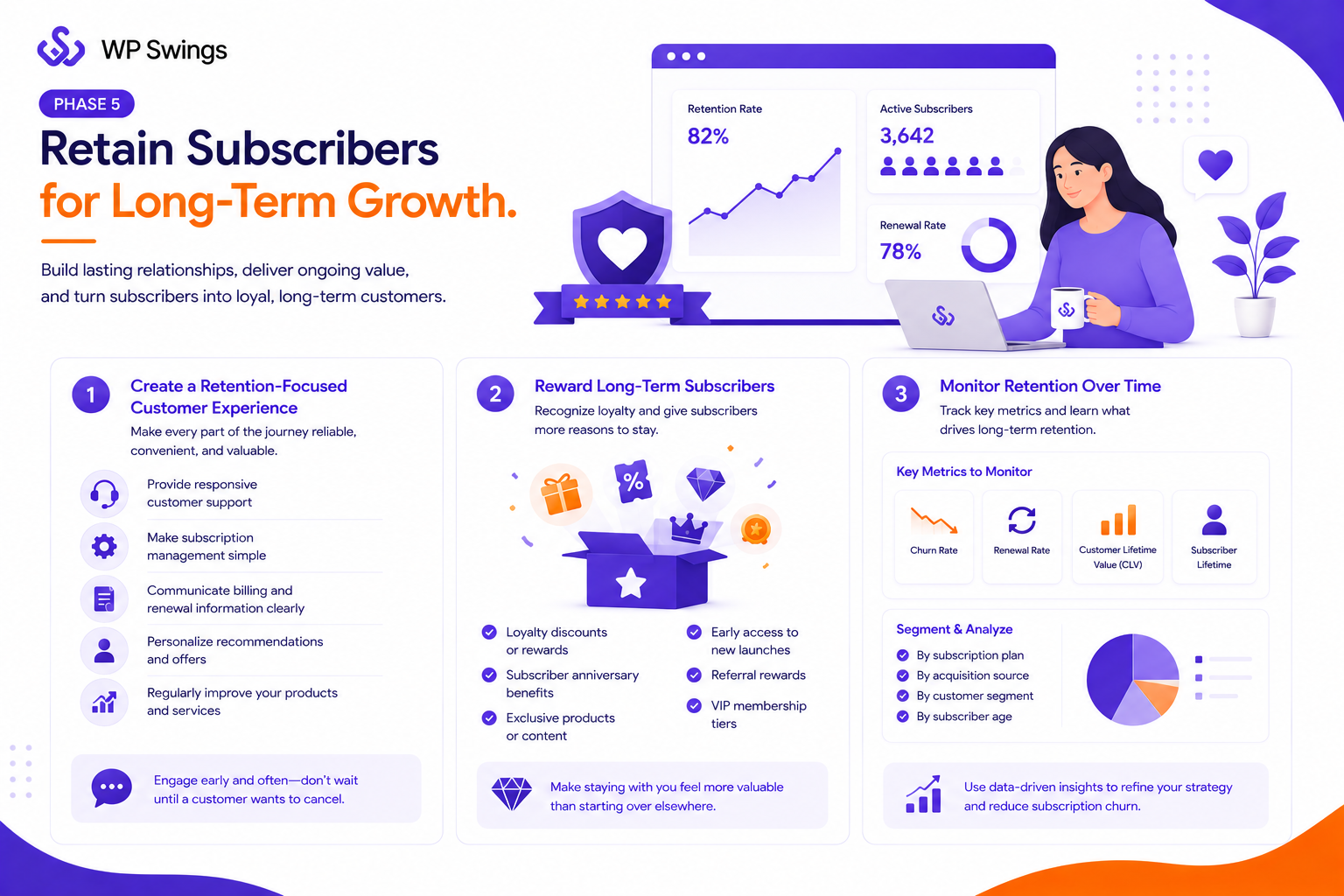
To reduce subscription churn over the long term, make retention part of your everyday customer experience rather than treating it as a last-minute cancellation strategy.
Create a Retention-Focused Customer Experience
Subscribers are more likely to remain loyal when their experience is reliable, convenient, and valuable. Small improvements across the customer journey can make a meaningful difference.
Focus on:
- Providing responsive customer support
- Making subscription management simple
- Communicating billing and renewal information clearly
- Personalizing recommendations and offers
- Regularly improving your products and services
Don’t wait until a customer is ready to cancel before engaging with them. Regular communication helps you understand changing needs and address friction earlier.
Reward Long-Term Subscribers
Your existing subscribers have already demonstrated trust in your business, so give them reasons to continue that relationship.
Consider offering:
- Loyalty discounts or rewards
- Subscriber anniversary benefits
- Exclusive products or content
- Early access to new launches
- Referral rewards
- VIP membership tiers
These incentives can make staying subscribed feel more valuable than starting over with a competitor.
Monitor Retention Over Time
Retention isn’t a one-time campaign. Track your churn and renewal metrics regularly to see which strategies are actually working. Compare retention across customer segments, subscription plans, acquisition sources, and subscriber age.
This helps you identify which customers are most likely to stay and where additional improvements are needed to reduce subscription churn.
Phase 6: Win Back Lost Subscribers
A cancelled subscription doesn’t always mean a lost customer forever. Some subscribers leave because of timing, budget constraints, changing needs, or a poor experience that can later be resolved. A well-planned win-back strategy gives you another opportunity to reduce subscription churn over the lifetime of your customer base.
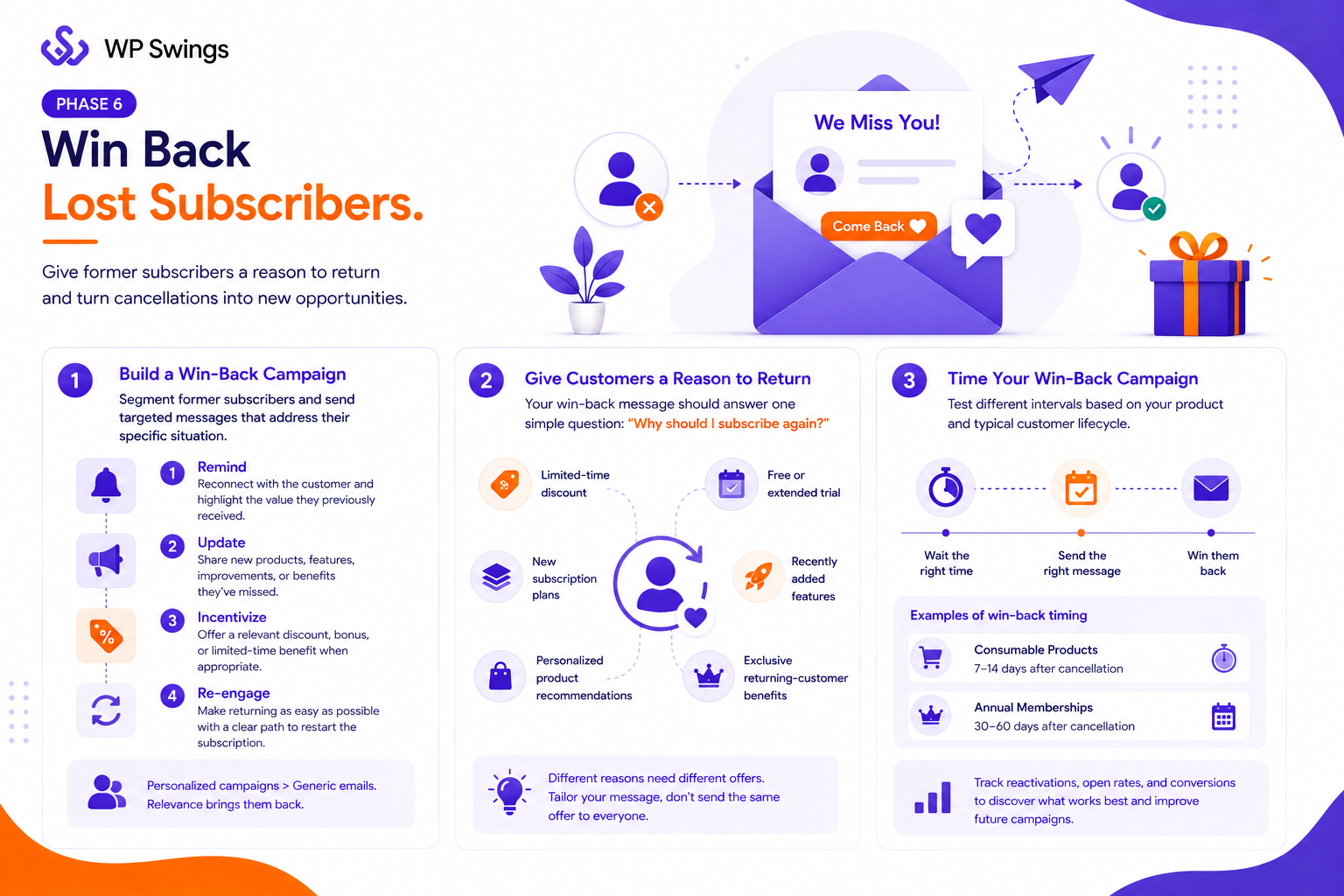
The key is to understand why someone left and make your return offer relevant rather than simply sending repeated discount emails.
Build a Win-Back Campaign
Segment former subscribers based on their cancellation reason, subscription history, and how long they’ve been inactive. Then create messages that address their specific situation.
A simple win-back sequence can include:
- Remind: Reconnect with the customer and highlight the value they previously received.
- Update: Share new products, features, improvements, or benefits they’ve missed.
- Incentivize: Offer a relevant discount, bonus, or limited-time benefit when appropriate.
- Re-engage: Make returning as easy as possible with a clear path to restart the subscription.
Give Customers a Reason to Return
Your win-back message should answer one simple question: “Why should I subscribe again?”
Depending on your business, you could offer:
- A limited-time discount
- Free or extended trial
- New subscription plans
- Recently added features
- Personalized product recommendations
- Exclusive returning-customer benefits
Avoid sending the same offer to everyone. A subscriber who left because of price needs a different message from someone who cancelled because they no longer needed the product.
Time Your Win-Back Campaign
Don’t contact every former subscriber at the same time. Test different intervals based on your product and typical customer lifecycle. For example, a consumable product may require a faster win-back campaign than an annual membership.
Monitor which messages generate reactivations and use those insights to improve future campaigns.
Building Your Subscription Churn Reduction System
A successful WooCommerce retention strategy shouldn’t rely on a single tactic. To consistently reduce subscription churn, WooCommerce merchants need a repeatable system that connects data, customer feedback, proactive interventions, and win-back campaigns.
Here’s a concise table summarizing the complete 6-phase subscription churn reduction framework:’
| Phase | Focus | What to Do |
|---|---|---|
| Phase 1: Measure | Understand your churn | Track customer churn, revenue churn, renewal rates, failed payments, and subscriber behavior. |
| Phase 2: Diagnose | Find out why customers leave | Analyze cancellation feedback, support issues, payment failures, engagement, pricing concerns, and competitor pressure. |
| Phase 3: Prevent | Stop avoidable churn | Improve onboarding, consistently deliver value, recover failed payments, and identify at-risk subscribers early. |
| Phase 4: Recover | Save at-risk subscribers | Use personalized interventions, support, incentives, and flexible options such as pauses or downgrades. |
| Phase 5: Retain | Build long-term loyalty | Improve the customer experience, engage subscribers regularly, offer loyalty rewards, and monitor retention. |
| Phase 6: Win Back | Re-engage former subscribers | Segment cancelled customers, understand why they left, share relevant updates or offers, and make reactivation easy. |
Turn Churn Insights Into Action
The most important part of this framework is connecting each stage. Don’t simply collect churn data and leave it in a dashboard. Use what you learn to improve your onboarding, customer experience, payment recovery, and retention campaigns.
For WooCommerce merchants, Subscriptions For WooCommerce Pro can support this process with subscription management capabilities and AI Churn Prediction & Revenue Forecasting, helping you identify potential churn risks and make more proactive retention decisions.
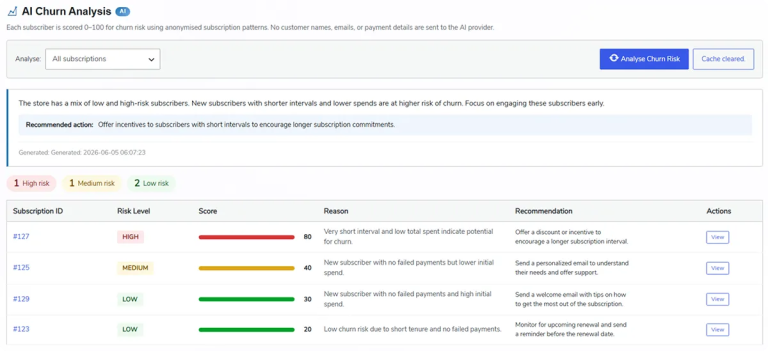
When measurement leads to diagnosis, and diagnosis leads to timely action, you create a continuous system designed to reduce subscription churn rather than simply react to cancellations.
Your Churn Reduction Checklist
- Track customer and revenue churn regularly
- Identify your most common cancellation reasons
- Improve subscriber onboarding
- Recover failed renewal payments
- Identify at-risk subscribers
- Offer flexible alternatives to cancellation
- Reward loyal subscribers
- Run targeted win-back campaigns
- Review retention results and optimize continuously
The goal isn’t to eliminate every cancellation. It’s to understand, prevent, and recover as much avoidable churn as possible.
Final Words: Reduce Subscription Churn With a Proactive WooCommerce Retention Strategy
Subscription churn is inevitable, but high churn doesn’t have to be. The key to sustainable subscription growth is taking action before cancellations become lost revenue.
As we’ve seen, businesses can reduce subscription churn by following a structured approach: measure churn to understand performance, diagnose why customers leave, prevent avoidable cancellations, recover at-risk subscribers, retain loyal customers, and win back former subscribers.
For WooCommerce merchants, combining these strategies with the right technology can make retention more proactive. Subscriptions For WooCommerce Pro helps merchants manage recurring subscriptions while its AI Churn Prediction & Revenue Forecasting feature can help identify potential churn risks and support smarter retention decisions.
Instead of waiting for customers to cancel, use your subscription data to understand who’s at risk and why. The earlier you identify a problem, the more opportunities you have to reduce subscription churn, protect recurring revenue, and build longer-lasting customer relationships.
Frequently Asked Questions (FAQ’s)
1. What is a good subscription churn rate?
It depends more on price point than industry. Lower-priced subscriptions (under $10-25) naturally run higher churn, often 30-40%+ annually, since cancelling is a low-stakes, one-person decision. Higher-priced subscriptions (above $1,000 ARPA) often stay under 15% annually. Rather than chasing a generic industry number, track your own trend over time and aim for it to move down month over month.
2. How do you calculate subscription churn rate?
Churn Rate = (Subscribers Lost ÷ Subscribers at Start of Period) × 100. Losing 30 subscribers from a base of 500 in a month is 6% monthly churn. For accuracy, exclude new signups from that period so a big acquisition month doesn’t flatter the number, and decide clearly whether a “pause” that never returns counts as churn.
3. What’s the difference between voluntary and involuntary churn?
Voluntary churn is a customer actively cancelling — due to price, low value, or a better alternative. Involuntary churn is a subscription lapsing from a failed payment, even though the customer wanted to stay. Involuntary churn makes up roughly 20-40% of all subscription churn, and it’s usually the cheapest to fix, recovering a failed card is easier than winning back an unhappy customer.
4. Why are my WooCommerce subscribers cancelling even though sales look strong?
Strong new-customer numbers can hide a retention problem underneath. Common causes: price no longer matching perceived value, weak onboarding that delays a customer’s first “win,” inconsistent product results, or unnoticed payment failures. Watching churn rate alongside growth, not subscriber count alone, is how you catch this early.
5. How can I reduce churn in my WooCommerce subscription store?
Combine a few tactics rather than one fix: strengthen onboarding, automate payment retries and dunning emails, watch for early warning signs (dropping engagement, support complaints), and offer flexible alternatives — pause, downgrade, change billing cycle, instead of a hard cancel-or-stay choice. Discounts alone rarely work as well as understanding why a specific subscriber is at risk first.
About the Author: Mohd Talib