

Creating successful loyalty programs for your customers involves choosing the best loyalty program mechanism, incentives tailored to your customers, target audience, and core loyalty program analytics tools to track success.
Customer loyalty programs are about rewarding customers for repeat purchases, but merchants often treat them as a powerful data storage engine that reveals how customers interact with their brand. If analysed correctly, loyalty programs can help you determine customers’ buyer journey, identify high-value customers, and triggers opportunities to increase revenue and engagement.
In today’s world, simply running a basic loyalty program isn’t enough. Without proper loyalty program analytics, businesses often miss critical information such as which rewards motivate customers, what drives repeated purchases, or why customers have stopped engaging.
In A Hurry? Here’s A Brief Summary…
- 80% of companies that track the loyalty program ROI see a positive return.
- 5% increase in conversion rates can boost your profits by 25% to 95%.
- Custom Lifetime Value (CLV) is the total revenue a customer will generate throughout their relationship with the company.
- Loyalty programs that utilise data analytics to customise rewards for customers see engagement rates increase by 6-7x compared to basic loyalty programs.
- Loyal customers spend 60-70% more than new customers. Loyalty program analytics helps identify these high-value customers to nurture them more.
- Many good loyalty programs suffer due to inactive members. By analysing buying patterns, participation insights, and engagement metrics, you can identify when customers are losing interest and intervene early.
- 40% of WooCommerce websites, if not updated in 6 months, make them vulnerable to security threats.
- Companies that actively use loyalty program analytics optimise reward programs and increase customer lifetime value up to 20–30%.
- A healthy loyalty program has a redemption rate of 20-40%, and loyalty program analytics helps businesses determine the redemption trends.
Loyalty program analytics is difficult, but not for you! In this article, we will cover loyalty program analytics, from definition to benefits, and finally, the key metrics, tools, and strategies.
This blog will help you understand how to turn customer loyalty analytics data into meaningful business profits
In This Blog, We Will Talk About…
(Jump to the section that interests you the most!)
What is Loyalty Program Analytics?
Loyalty program analytics is the process of collecting, analysing, and interpreting data to determine customer behaviour and identify purchasing patterns that indicate loyalty.
By analysing existing loyalty programs, businesses can gain insights into how to incorporate different loyalty programs and which ones work best to increase the customer lifetime value and reduce churn rates.
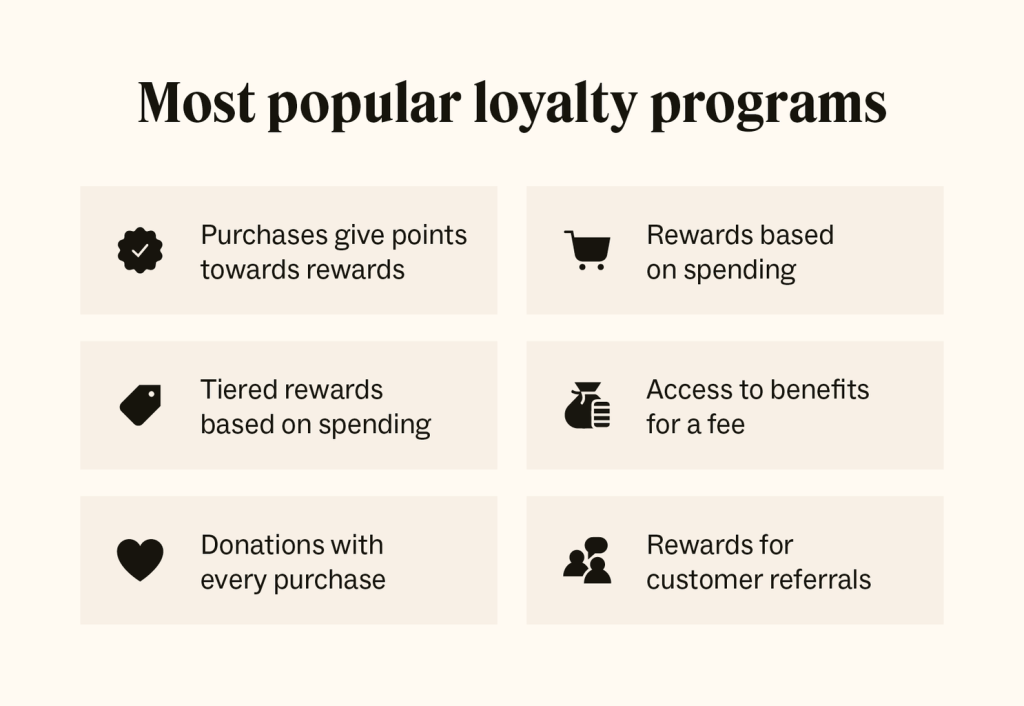
You’ll be surprised to know that there are different kinds of customer loyalty programs –
Let us also understand the workflow of loyalty program analytics –
1. Data Collection
This involves collecting customer data from all touchpoints. These include purchases, website visits, app usage, loyalty program activities, and customer reviews or feedback. These data are collected by CRM (Customer Relationship Management) tools, Point of Sale (POS) systems, and other loyalty program analytics.
2. Integration
All the mentioned data sources are integrated in this step, often through loyalty program analytics tools or other resources, to create separate customer profiles to observe their behaviour across different touchpoints.
3. Segmentation
After creating individual customer profiles, the next step is to create different customer segments based on behaviour patterns, customer preferences, and loyalty type (frequent buyer, inactive customer, or high-value customer). This allows businesses to offer personalised engagement.
4. Tracking Performance
Key loyalty program metrics like customer lifetime value (CLV), customer retention rate, and reward redemption rate are calculated in this step. Want to learn more about the calculations of these metrics? Don’t worry, we will cover that in the next section. These loyalty program analytics metrics help determine whether a loyalty program is working or needs reevaluation.
5. Future Predictions
Many companies also use AI models for loyalty program analytics to predict future purchase behaviour, such as potential high-value customers. Utilising the data, they can create proactive strategies to nurture them (potential high-value customers) in a better and more effective manner.
6. Insights & Actionable Strategies
The analysed data is then transformed into actionable strategies that improve reward systems, customise communication models, and enhance the overall customer experience. Businesses can proceed by adjusting reward structures, personalised offers, improving customer engagement strategies, and creating targeted campaigns.
Why Loyalty Program Analytics Matters?
Businesses require loyalty program analytics to generate a significant amount of customer data, from buyers’ purchase frequency and reward redemption rates, to engage customers with promotions.
Creating a loyalty program that clicks is a huge deal; many permutations and combinations need to come together for it to be a hit. There are also times when they may not perform well; in that case, business owners can analyse which factor is underperforming. But if the loyalty program outperforms, that also needs to be analysed to determine which elements are performing in your favour.
The benefits of loyalty program analytics –
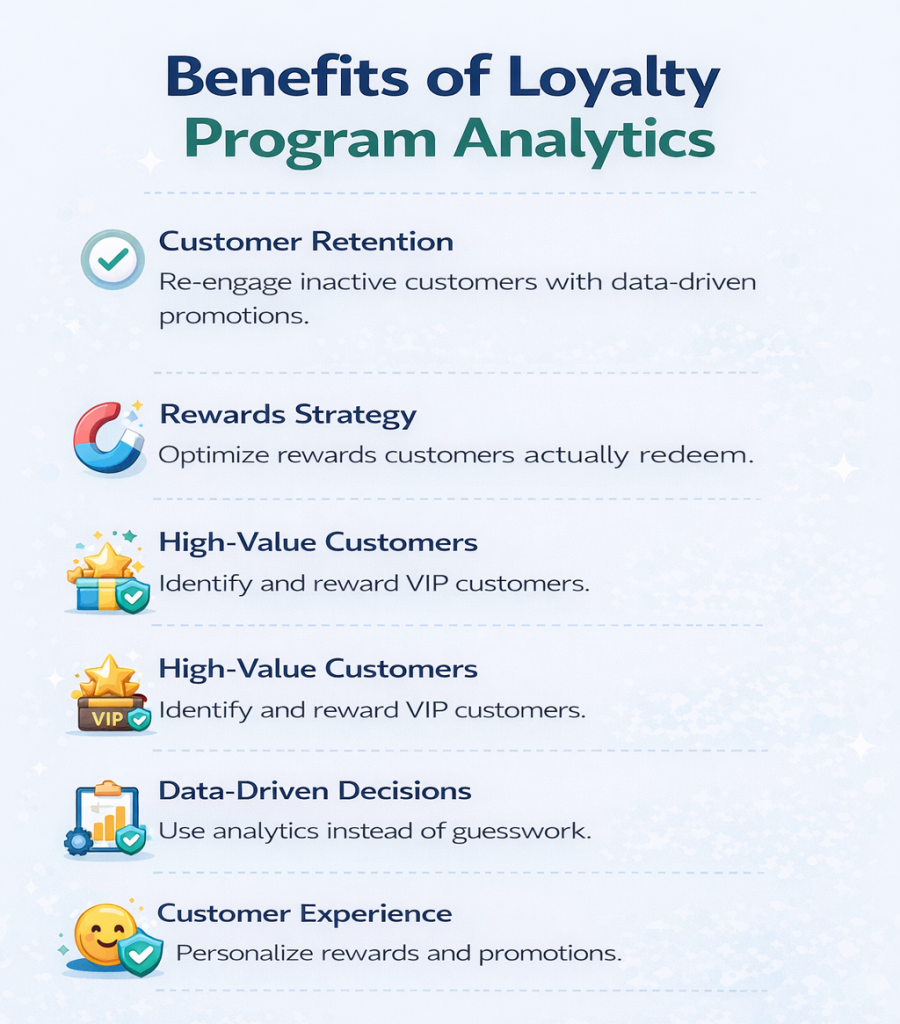
1. Improved Customer Retention
By analysing loyalty program analytics on a daily/weekly basis, business owners can verify engagement levels, purchase frequency, and customer activities across the website. Businesses then identify the inactive customers. This allows them to trigger targeted promotions or rewards to re-engage customers.
2. Effective Rewards Strategy
Tracking reward redemption rates helps businesses understand which rewards are most appealing to customers, making them more likely to become loyal to your brand. Furthermore, customer interactions across the website can be tracked, which allows businesses to refine reward strategies that truly drive engagement.
3. Identifying High-Value Customers
Loyalty program analytics helps businesses identify the most profitable customers (who are more likely to choose them over competitors). Businesses can then create separate membership tiers. These VIP tiers offer exclusive perks and early access to discounts to strengthen the relationship with those customers.
4. Data-Driven Decision Making
Loyalty Program Analytics replaces guesswork with marketing decisions backed by actionable insights. Businesses can utilise real customer data to decide which elements of loyalty programs are working, which rewards are effective, and which customer segments need reevaluation.
5. Enhanced Customer Experience
With loyalty program analytics, businesses can tailor products, loyalty programs, and reward types to meet the specific preferences of loyal customers. Designing targeted promotional campaigns for customers helps enhance their experience across all touchpoints.
6 Metrics You Can’t Do Loyalty Analytics Without
Imagine this scenario: you understand how loyalty program analytics work and its benefits for your business. But tracking the correct metrics makes all the difference.
Here is the list of key metrics that are essential for loyalty program analytics to function smoothly.
1. Net Promoter Score (NPS)
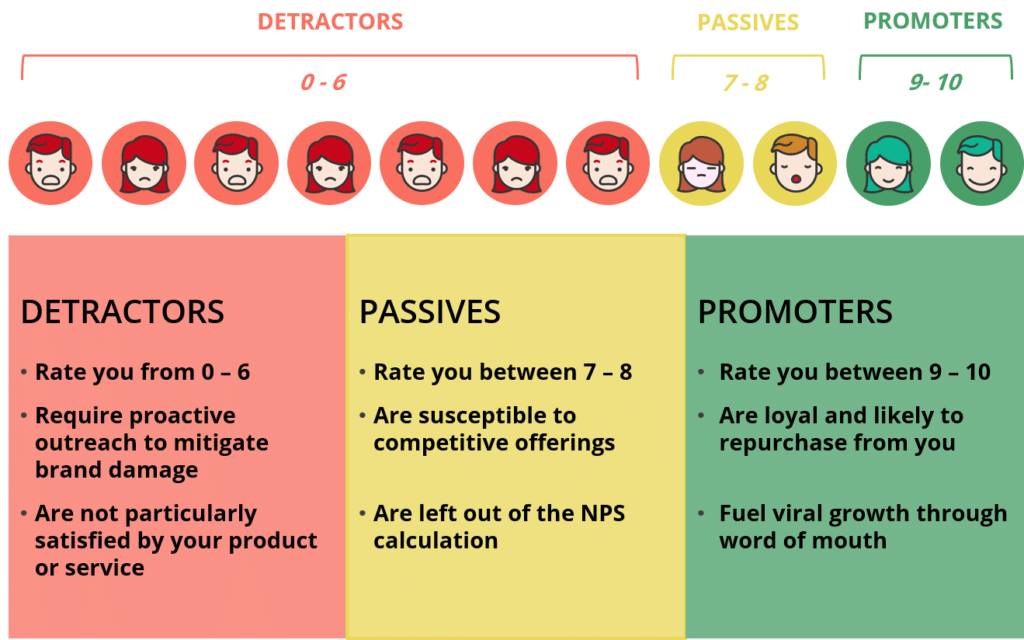
This measures customer loyalty by asking customers how likely they are to recommend a company’s products or services to others. Generally, a Net Promoter Score above 20 is favourable, over 50 is excellent, and above 70 is considered world-class.
The formula to calculate Net Promoter Score is –
NPS = Promoters(%) – Detractors (%).
(Promoters mean individuals who are interested in your product, and Detractors mean individuals who are not interested in your product)
For example:
100 total responses: 40 Promoters (%) and 20 Detractors (%)
NPS = 40% – 20% = 20%
2. Repeat-Purchase Rate
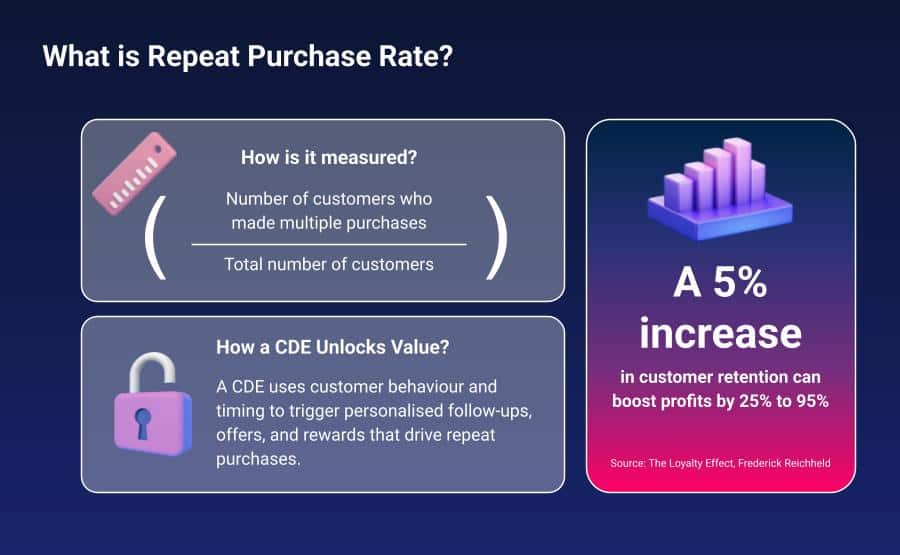
This measures the percentage of customers who make repeat purchases within a certain period. A good repeat purchase rate for eCommerce businesses is between 20% and 40%. An RPR of 30% shows a strong customer loyalty and a healthy business, and an RPR below 25% shows an urgent requirement for better retention activities.
The formula to calculate Repeat Purchase Rate is –
RPR = Number of Repeat Customers/Total Number of Customers X 100
For example:
If you have 1,000 total customers and 300 of them made a second purchase in a month, your rate is 300/1000 X 100 = 30%.
3. Customer Retention Rate
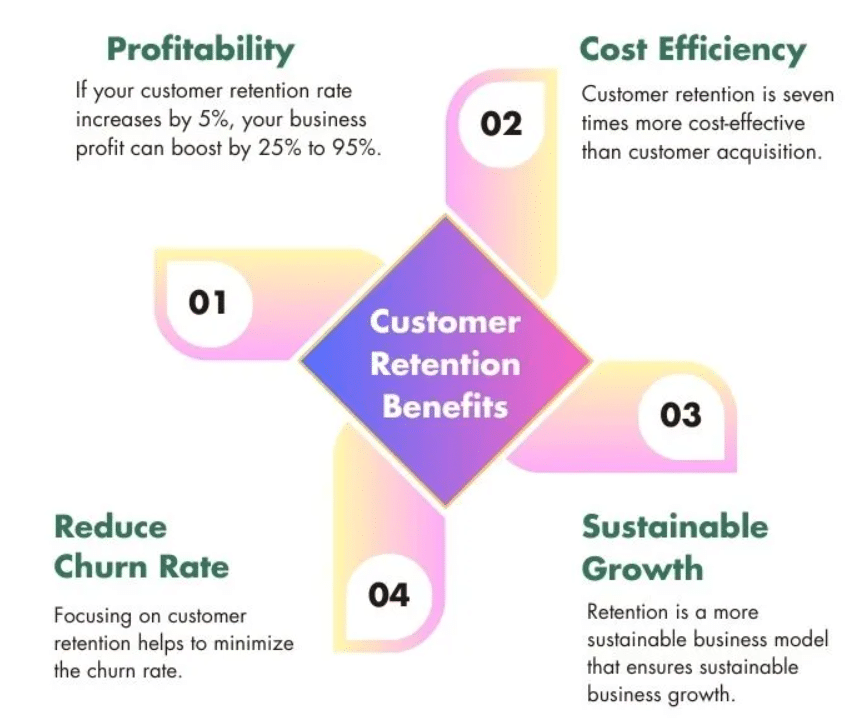
This measures the percentage of customers who continue to do business with a company over a certain period. A good customer retention rate (CRR) typically falls between 70% – 85%, with 90%+ considered exceptional.
The formula to calculate Customer Retention Rate is –
(End Customers – New Customers) / Start Customers X 100
For example –
Let’s say you have 100 customers at the start of one month. During that period, you gained 20 new ones. You now have 120 customers at the end of the period. Input those numbers into the formula:
Customer Retention Rate = 110-20 = 90 /100 =0.9 X100 = 90%
Your retention rate for that period was 90%
4. Customer Lifetime Value (CLV)
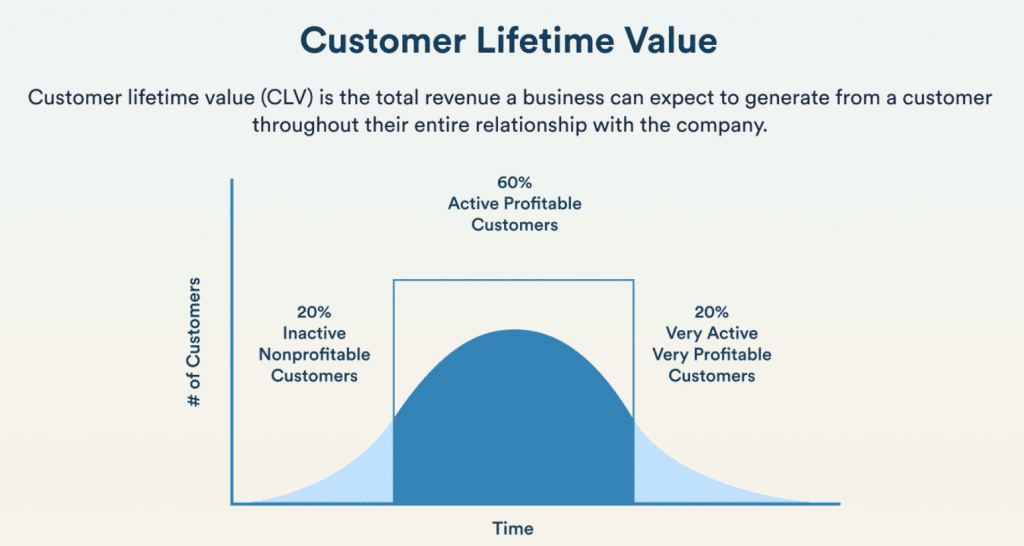
This measures the total revenue a company can expect to generate from a customer over their lifetime.
Basic Formula (Revenue-based):
Customer Lifetime Value = Average Order Value (AOV) X Purchase Frequency X Customer Lifespan
For example: A customer’s Average Order Value (AOV) is $50, Purchase Frequency is 2 (orders/year), and Lifespan is 3 years.
CLV = $50 X 2 X 3 = $300.
5. Customer Satisfaction (CSAT)
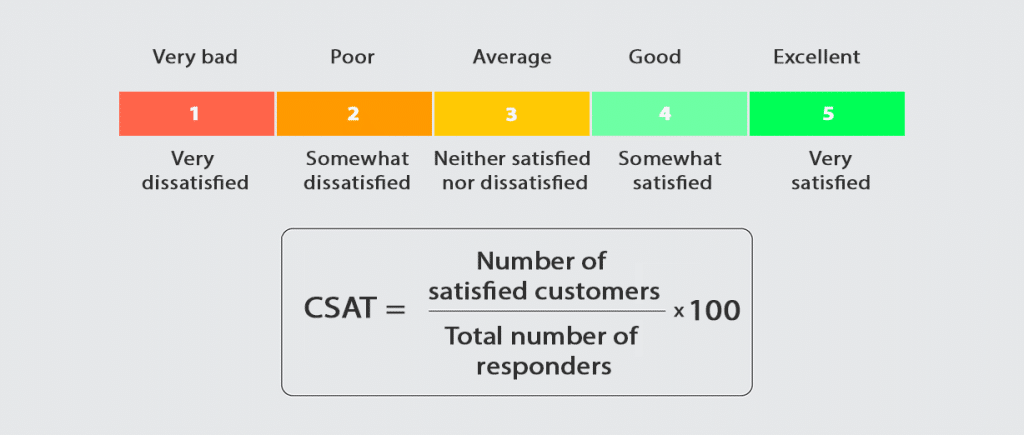
This measures how satisfied customers are with a company’s products or services. A good customer satisfaction (CSAT) score typically ranges from 70% to 85%, indicating that a product or service meets or exceeds customer expectations.
The formula to calculate Customer Satisfaction (CSAT),
CSAT = (Number of satisfied customers / Total number of customers) X 100
If 80 customers out of 100 responded as satisfied, the calculation is (80/100) X 100 = 80%.
6. Brand Advocacy
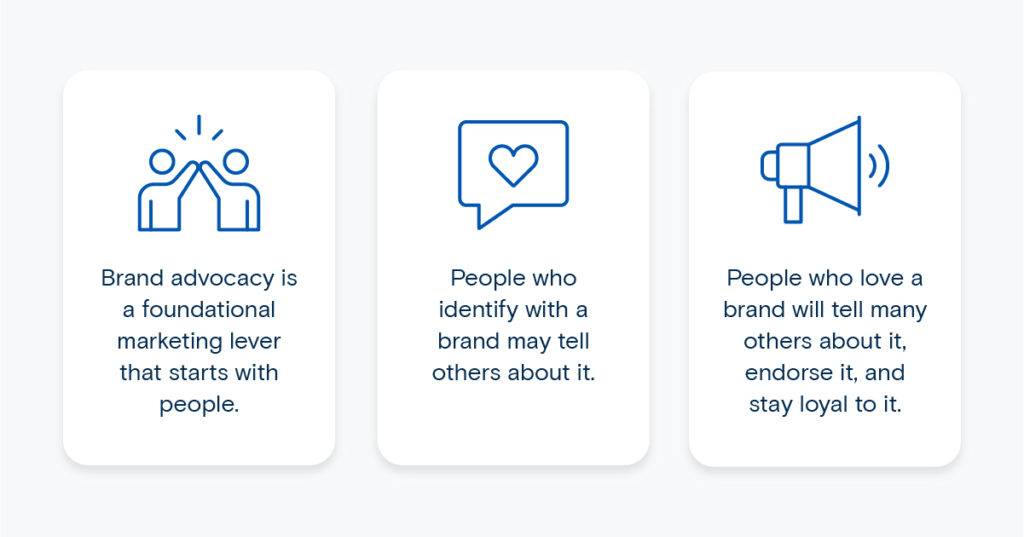
This measures the willingness of customers to recommend a brand to others. It can be measured by counting the number of shares on social media or by asking customers directly.
Points and Rewards for WooCommerce – The Ultimate Loyalty Program
As we mentioned before, in the ongoing competition amongst WooCommerce stores, it is important to be unique yet accommodating to your customers. Loyalty program analytics is essential, but it is also important to create a loyalty program worth tracking.
Points and Rewards for WooCommerce is the plugin that will help you achieve this and so much more for your eCommerce store. Merchants can get complete access to features like daily login points, rewards on birthdays, points log reports, membership benefits, and more!
Some of the popular on-demand features of this points and rewards plugin are mentioned below,
- User Level & Badges: Admins can now motivate customers to earn reward points through various activities by awarding unique user badges. These badges represent different levels of achievement. The admins have full control over their position and level names.
- Gamification: Merchants can enhance their website’s engagement with gamification marketing. Customers can spin the “win-wheel” for rewards. Customise positions, colours, and segments while setting points per section. Control spinning freedom and engagement levels.
- Purchase through Points: Merchants can enable users to purchase items with just WooCommerce reward points. They can also assign points to different available categories.
- Assign Product Points and Rewards: Using this WooCommerce Points and Rewards plugin, merchants can assign reward points to the products as well as different categories. He/she can do this from the Assign Products Setting of the plugin.
- Build Membership: Build your membership program to reward your customers. Admin can create multiple membership tiers and add the number of points to join them. Discounts and the expiration date can also be set.
- Referral Points: The merchants can offer points and rewards to the referrer for every unique referral. The admin just needs to enable the referral Woo points option and then enter the number of points and the minimum referrals required.
Create Successful Loyalty Programs!
Frequently Asked Questions
1. What are the 4 pillars of loyalty program?
The four essential pillars of a loyalty program are trust, transparency, relationship, and gratitude. Brands can build long-lasting relationships with their customers.
2. What are the metrics of loyalty programs?
The six top metrics of loyalty programs are –
- Net Promoter Score
- Repeat Purchase Rate
- Customer Retention Rate
- Customer Lifetime Value
- Customer Satisfaction
3. What is Loyalty Analytics?
Loyalty program analytics is the process of collecting, analysing, and interpreting data to determine customer behaviour and identify purchasing patterns that indicate loyalty.
By analysing existing loyalty programs, businesses can gain insights into how to incorporate different loyalty programs and which ones work best to increase the customer lifetime value and reduce churn rates.
About the Author: Muskaan Sabarwal