



Are you planning to start an eCommerce store?
I would say it’s a great idea since the recent survey claims that 95% of purchases will be done online by 2040.
However, the idea of an online business also brings some real struggles and confusion. The most critical doubt is selecting the eCommerce platform for doing business online.
Two ultimate solutions are better than the rest: WooCommerce and Shopify.
WooCommerce and Shopify have multiple strengths and can be an ideal key for you to construct an eCommerce store, and you can do this all on your own without any support from experienced designers or developers.
Firstly, which platform best fits your business requirements , Shopify or WooCommerce? Which is more feature-rich or more affordable or flexible, and easy to work with?
There are tons of questions to answer, but you will get all the solutions in this in-depth comparison, and you will learn exactly which eCommerce platform to select based on your necessities. So, let us dive into it!
Key Takeways
- WooCommerce and Shopify are two of the most popular eCommerce platforms, each designed for different business needs and skill levels.
- WooCommerce offers complete customization, flexible pricing, and strong SEO capabilities through its integration with WordPress.
- Shopify provides an all-in-one hosted solution with built-in hosting, security, and an easy-to-use interface for beginners.
- WooCommerce is ideal for businesses focused on content marketing, blogging, and advanced store customization.
- Shopify simplifies store management by handling technical tasks like security, backups, and updates automatically.
- Both platforms support multiple payment gateways, but Shopify may charge additional transaction fees for third-party payment methods.
- Your choice between WooCommerce and Shopify should depend on your budget, technical expertise, scalability needs, and long-term business goals.
WooCommerce vs Shopify! What Is the Basic Difference?
To begin our in-depth comparison of the two most favored eCommerce platforms on the web, we must lay out the basics and highlight what drives these platforms to show up.
What Is WooCommerce?
WooCommerce is an open-source eCommerce plugin made for WordPress. It lets you leverage the most effective content management system (CMS) to operate an online store with powerful CMS development capabilities.

WordPress is the beloved website builder fueling 43% of all websites, and what many do not know, WooCommerce is the most favored eCommerce platform (actually more famous than Shopify).
According to BuiltWith, more than 3.8 million WordPress websites operate on WooCommerce, making it the most famous platform in the eCommerce industry. A triumph due to the ease of use, powerful features, and endless customization choices.
Hire Professionals To Build Your eCommerce Business!
What Is Shopify?
Shopify is a hosted eCommerce platform that enables you to create an online store, receive payments, and handle your inventory, all from a single platform. This platform has more than 1 million merchants and delivers a host of new features thanks to regular updates.
With Shopify, you do not require to bother about technical knowledge. Every aspect of the Shopify plan includes web hosting, security, domain, etc. Just purchase the Shopify package, and you can begin monetizing it.
Plus, Shopify app builders allow you to customize your store with apps that enhance functionality and customer experience.
Both WooCommerce and Shopify are excellent places to begin your business. However, you can even push more sales when incorporating your WooCommerce or Shopify store into splendid online marketplaces like Amazon, eBay, Etsy, and more. Choosing between the two platforms depends totally on your requirements and skill level.
Detailed Features Comparison Table
| Feature | WooCommerce | Shopify |
|---|---|---|
| Platform Type | Open-source WordPress plugin | Fully hosted eCommerce platform |
| Ease of Use | Requires setup and some technical knowledge | Beginner-friendly and easy to use |
| Hosting | Self-hosted (choose your own hosting provider) | Hosting included |
| Pricing Structure | Free core plugin, pay for hosting/plugins/themes | Monthly subscription plans |
| Customization | Highly customizable with full code access | Limited compared to WooCommerce |
| Themes & Design | Thousands of WordPress themes available | Professional but limited theme selection |
| SEO Features | Excellent SEO with WordPress plugins like Yoast | Good built-in SEO tools |
| App & Plugin Support | Access to 50k+ WordPress plugins | Large Shopify App Store |
| Payment Gateways | Supports many gateways without extra fees | Supports many gateways but extra fees may apply |
Overall Popularity
Let us take a look at the Market and Google Trends of WooCommerce and Shopify:
Market Share
WooCommerce and Shopify are the two ultimate platforms for creating an online store.
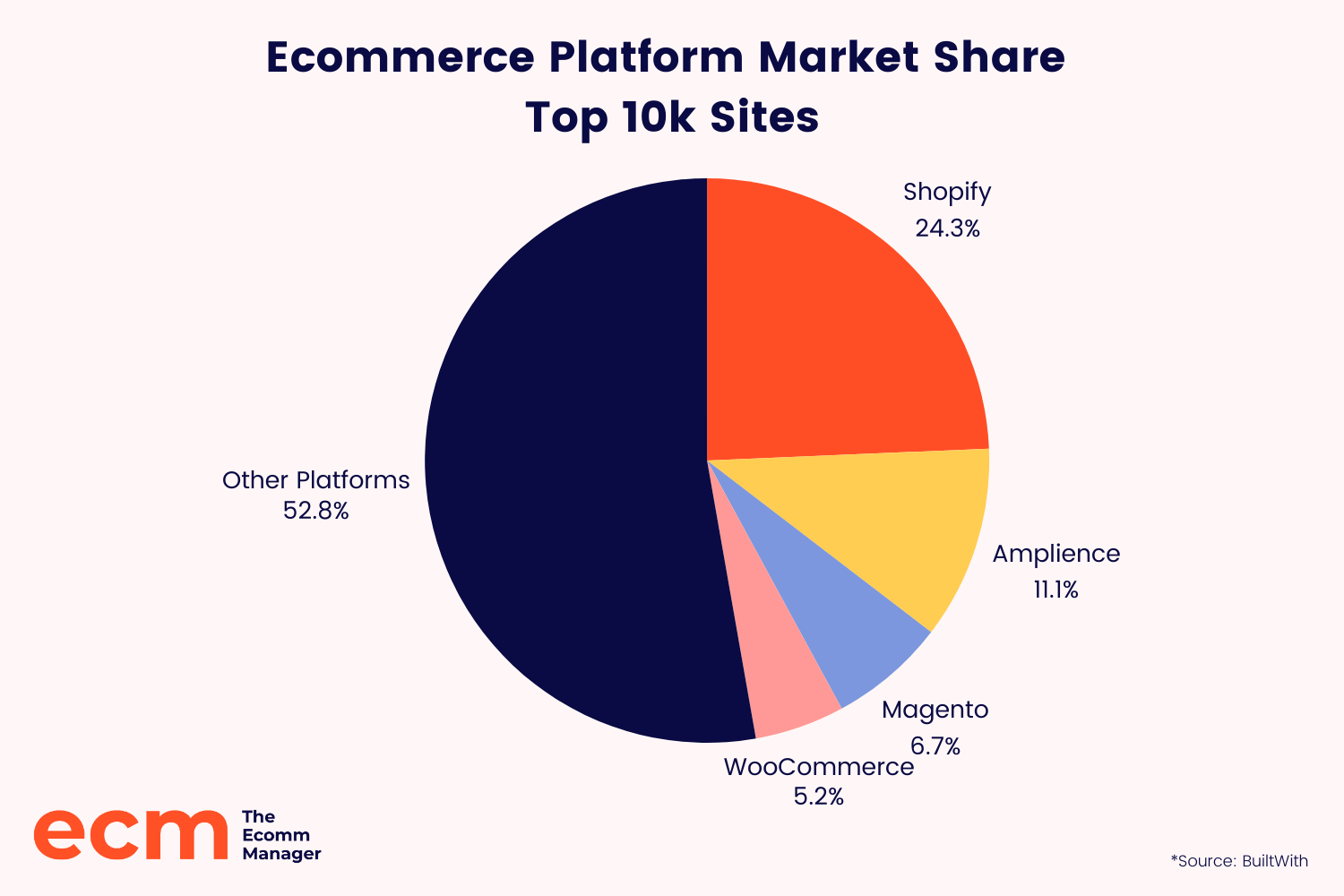
Shopify leads the top 10k ecommerce sites with a 24.3% market share, serving nearly 6 million users. WooCommerce, while popular for its frequent downloads of around 30,000 per day, accounts for 5.2% of the market. Magento holds 6.7%, and Amplience captures 11.1%.
Together, these platforms compete within a landscape where other platforms make up the remaining 52.8% of the market.
Google Trends
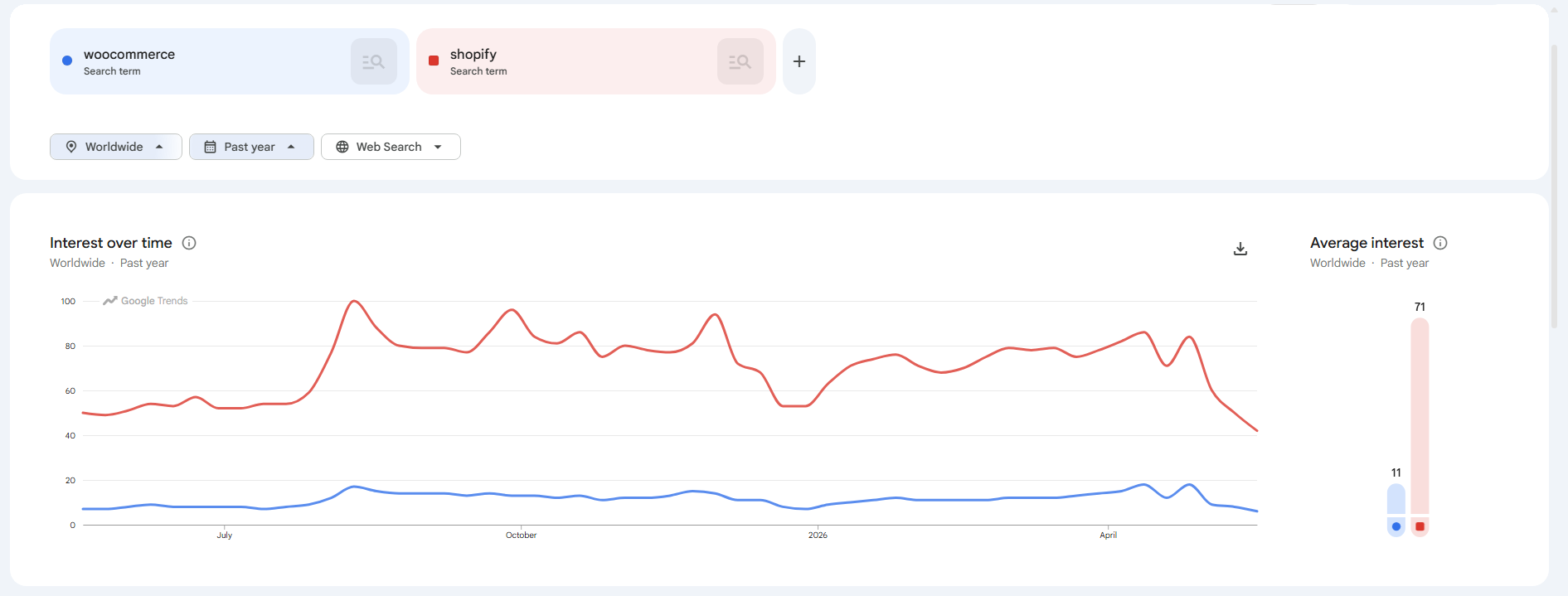
The worldwide comparison- Shopify vs WooCommerce for 12 months. The Google Trends result encloses the index of the interest over time, which expresses search interest close to the highest point on the chart for the time, and the regional analysis comparison.
WooCommerce vs Shopify: Compared for 2026!
We’ve done some research and looked into what each of these platforms has going for them. Keep reading to find out who comes out on top.
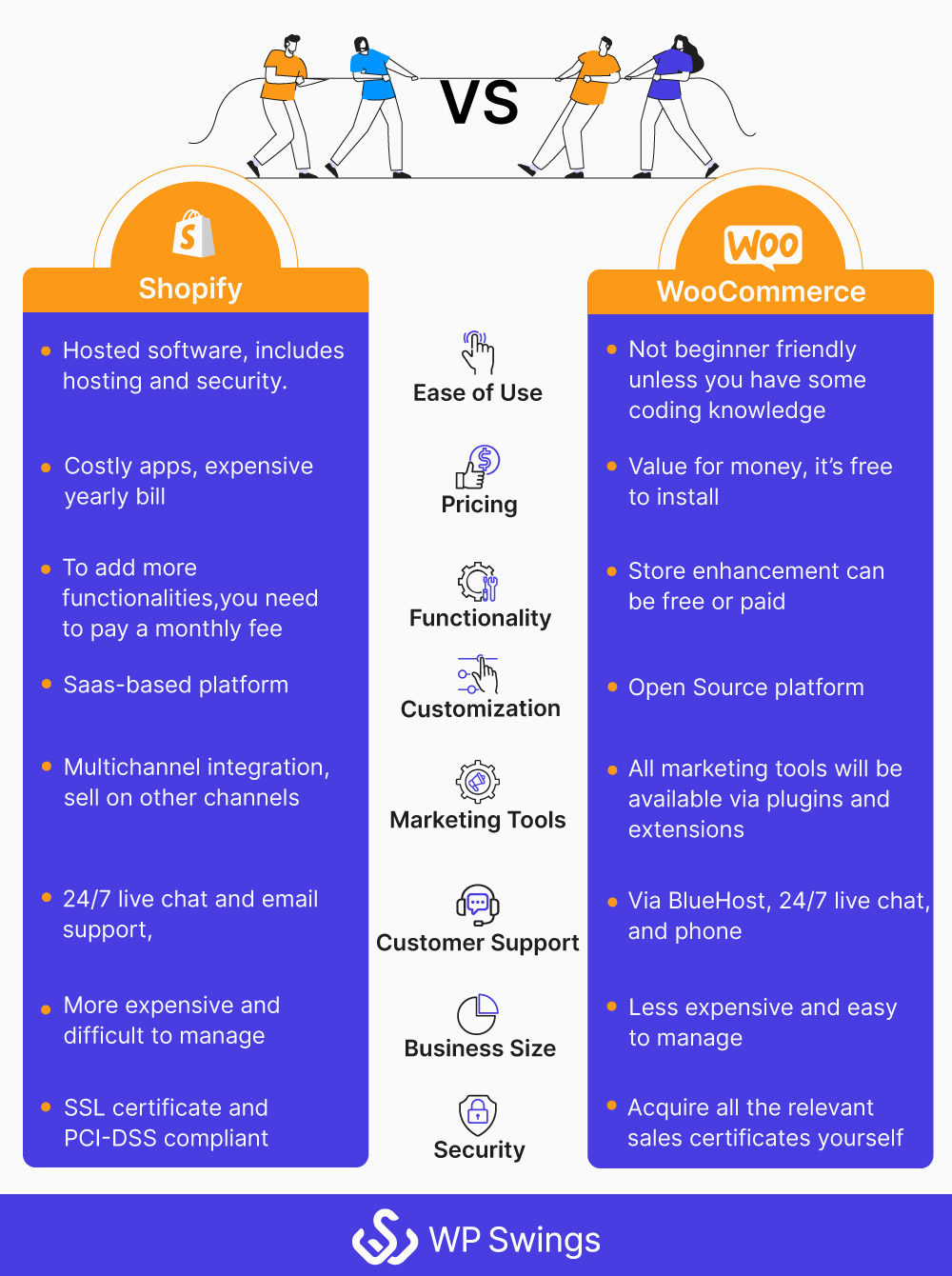
Now let’s start the showdown…
WooCommerce vs Shopify: Ratings & User Preferences
Well, this is the first and very basic criteria of difference – The Ratings!
As a customer, we often look out for reviews and ratings of the product before we make a decision to purchase, even for daily-use commodities. Of course, it makes sense that the entrepreneurs who’ll be investing their fortune to start and run a business will do some research too.
As per the ratings, it gets you a little closer to trimming down your requirements before choosing which eCommerce platform is best for you.
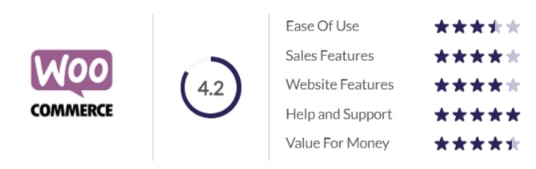
The WooCommerce platform aggregates to 4.2 ratings with the highest ratings in the Help & Support category followed by Value for Money, Website Features, Sales Features, and Ease of Use (the minimum rated).
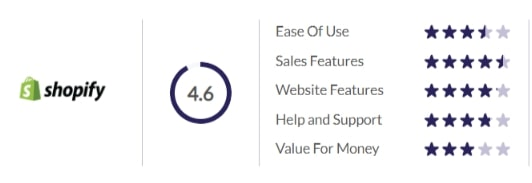
The Shopify platform on the other hand leads the ratings with a 4.6 score, being the Sales Features to be highly rated followed by the Website Features category and least rating the Value for Money category.
The market giants and users often share their preferences with bifurcated scoring for the features that are relevant and non-relevant for their businesses. Litextension also shared their honest review with the following ratings considering the pros and cons of working with each platform.
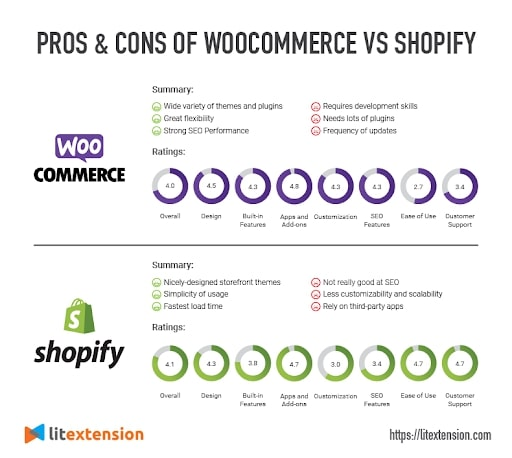
WooCommerce vs Shopify: Pricing
The very basic factor of confusion – “How much are you willing to invest in starting an eCommerce business?”
Setup costs are not the only major expense for starting an online business. Instead, it is just one of the costs followed by many others. Hence, you might either look for a fixed pricing package or a flexible pricing structure. It is completely your choice considering the requirements of your business model.
Well for the eCommerce platforms in the face-off, WooCommerce is the FREE platform with flexible pricing while Shopify has a fixed pricing structure.
| WooCommerce | Shopify |
|---|---|
| Cost Occurs in Hosting the Website | Shopify Basic ($20/month) |
| Theme Development Cost | Shopify Grow ($79/month) |
| Plugin Purchase Cost | Shopify Advanced ($313/month) |
The fixed pricing structure of Shopify, however, makes it more convenient to track spending than the dynamic spending structure of WooCommerce.
Note: Both WooCommerce and Shopify offer “Enterprise-level Pricing Plans” via quote, suitable for enterprise businesses.
How Much Does It Cost To Run An Online Store?
WooCommerce vs Shopify: Usability
Not all business owners are technically sound and comfortable with complex technical procedures. Well, you may or may not be good with the technicality. But, in either case, having an easy-to-use portal to set up an online store will be the best. Isn’t it?
In the showdown of Shopify Vs WooCommerce, I voted for Shopify in this category.
Shopify is fairly easy and quick to get familiar with. As you already know, Shopify is the complete tool. Therefore, it is more comfortable to manage products, payments, inventory, etc. Furthermore, Shopify offers a smooth drag-drop menu to handle everything flawlessly.
WooCommerce, on the other hand, isn’t a complete package. This means that the site owner has to manually look into each activity from the site hosting to its security.
However, 50k+ WordPress plugins are available to serve you the required purpose but it will eventually increase your installation costs.
Explore more WooCommerce Plugins
WooCommerce vs Shopify: Scalability
With the expansion of business, the struggles for handling and streamlining various processes also grow. Amongst the two eCommerce platforms in the discussion, Shopify conveniently manages every technical aspect for you. It automatically looks for security improvements, upgrades, backups, and other factors hassle-free.
On the other hand, WooCommerce gets a little baggy because increased traffic on the WooCommerce store means more need for manual challenges like upgrading web-hosting plans, improving caching, and content management systems, etc.
WooCommerce vs Shopify: Design, Themes & Templates
The first thing that attracts your customer’s interest after landing on your website is the design, look, and feel of your website. The UI/UX is important to hold the eye of your customers – something that they couldn’t resist but explore.
Website designs, themes, and templates are hence the vital elements of your business setup process. Taking this into consideration with the Shopify Vs WooCommerce tiff, WooCommerce takes a huge leap, leaving Shopify with tough competition.
Shopify themes and designs are alluring and can be customized from the admin panel. Shopify is still restricted in the number of themes available.

While with WooCommerce, it’s hard to think about such limits. The reason is that WooCommerce is compatible with almost every WordPress theme and template.
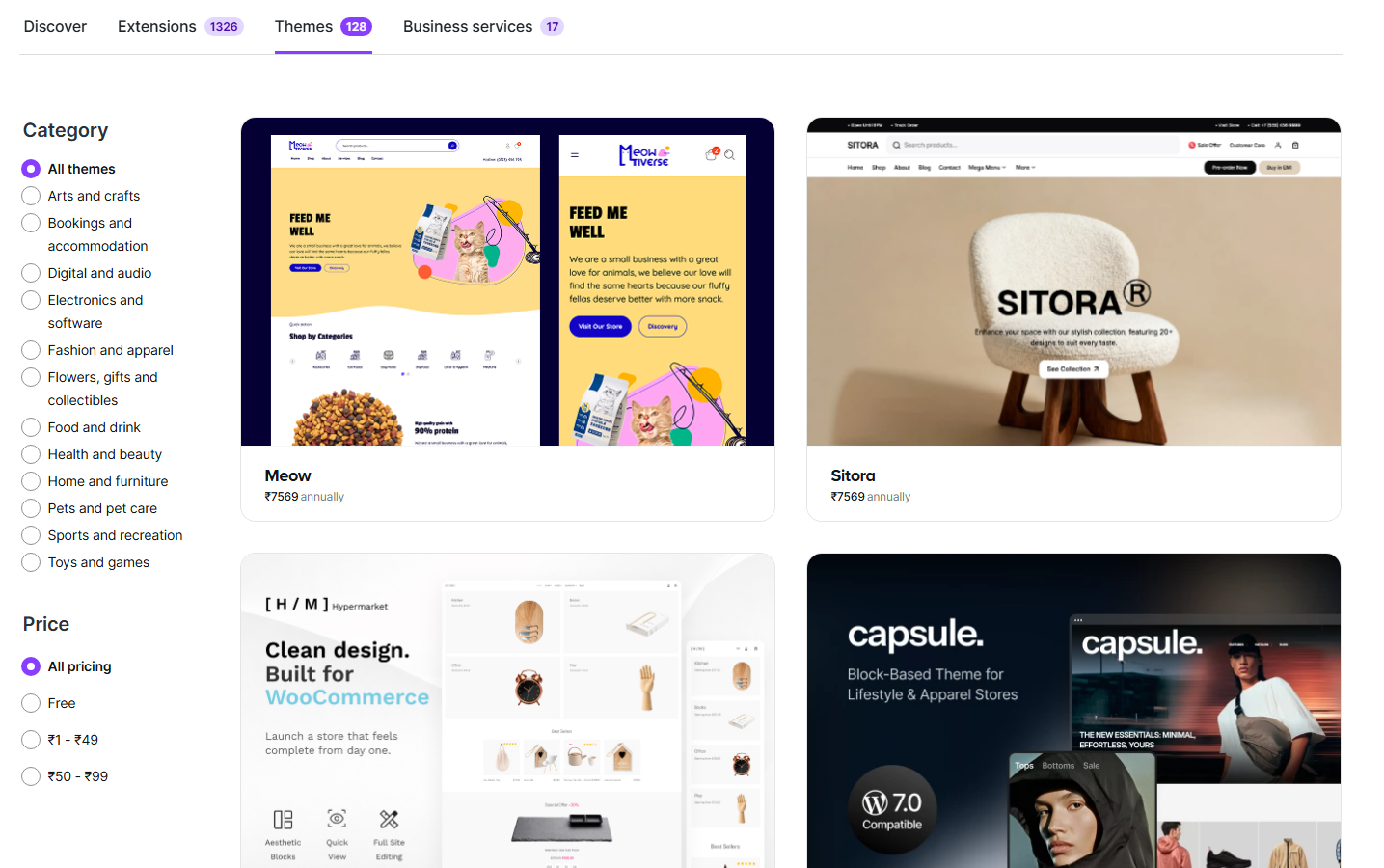
Therefore, you have a wide range of choices to choose the themes and templates for your online storefront with WooCommerce. And yes, the themes and Templates for WooCommerce can also be customized as per your needs.
WooCommerce vs Shopify: Blogs & Content
Content plays a critical role in online businesses. All your marketing, sales, and other processes are somehow dependent on the content you share with your customers.
WordPress is the best Content Management System that gives an added advantage to WooCommerce. With WooCommerce, creating blogs and content allows you to use the most creative and innovative approaches. Blogging with WooCommerce gets even more handy with the themes and templates support.
On the other hand, blogging with Shopify is just another standard feature. Although it is quite easy to blog with Shopify as well, it lacks the innovative advantages that WooCommerce can offer.
WooCommerce vs Shopify: Plugins and Installation Support
Adding plugins to your eCommerce store helps you to extend your store’s functionalities. These extended functionalities can be anything from simple inventory management to a one-click checkout process, marketing to SEO, and
EVERYTHING!
Since WooCommerce is an open-source platform and an eCommerce plugin for WordPress sites, it has access to 50k+ plugins – both free and paid. Therefore, building a fulfilling website without any limitations is easier with WooCommerce.
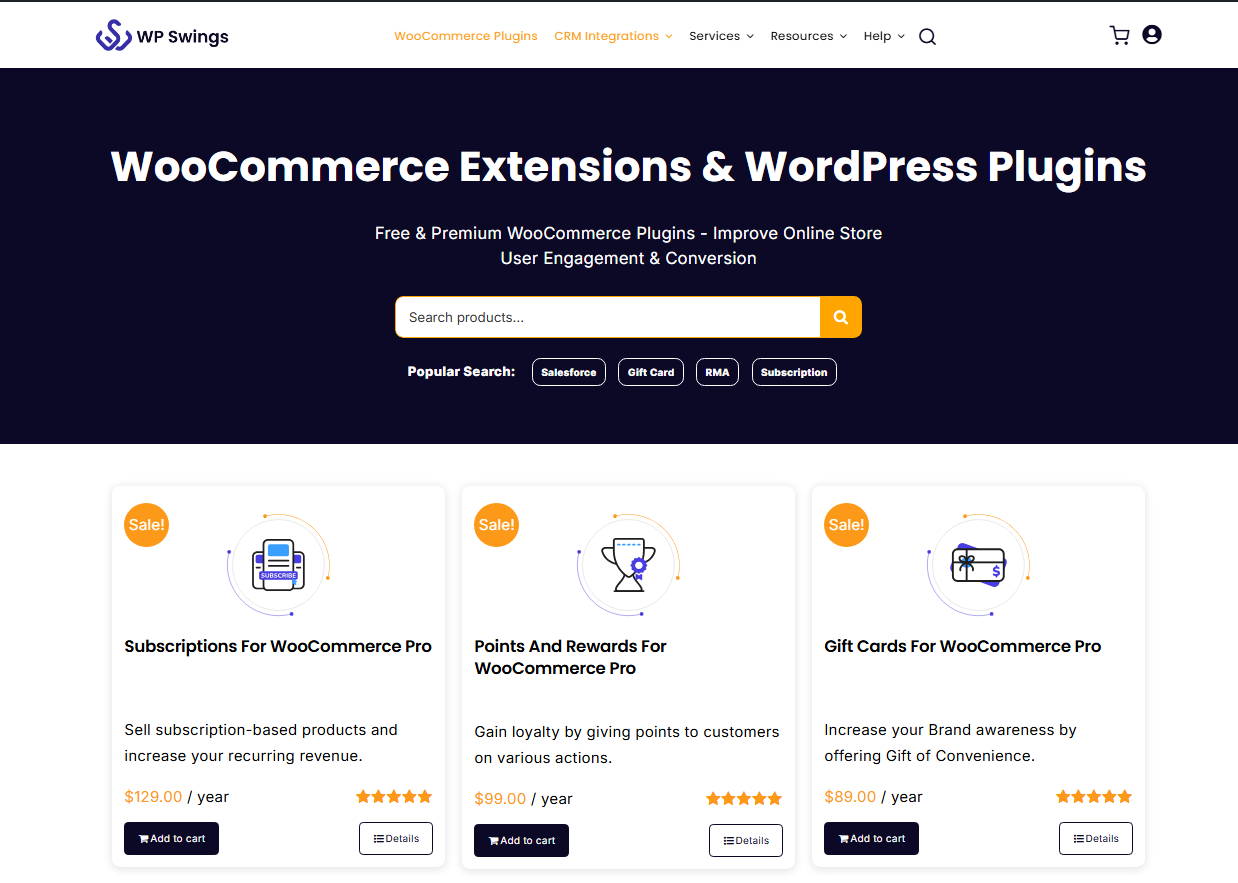
Shopify has a wide range of apps available in its App Store. However, most of these apps are developed by third parties and have their own costs.
Explore The Top WooCommerce Plugins In The Market With Us!
WooCommerce vs Shopify: Payments and Transaction Fees
An eCommerce business’s basic requirement to sustain itself in the market is the options it offers for customers to make payments. Offering multiple payment methods improves customer convenience and trust WooCommerce and Shopify, both eCommerce platforms, offer over 100 payment gateways – either built-in or added via integrations.
WooCommerce, by default, supports PayPal and Stripe as payment methods. However, regional payment methods are also supported by WooCommerce. The plus point here is that there is no additional transaction fee involved in WooCommerce, as it is self-hosted.
Shopify, on the other hand, offers multiple payment gateways along with its own developed payment gateway powered by Stripe.
Also, you can opt for the third-party payment gateways too, but it is, however, followed by the additional transaction fee, which is 2% on each transaction for the basic plan and 5% for the advanced plans.
WooCommerce vs Shopify: Security
All businesses need security – for themselves and for their customers as well. It’s even more crucial for online retailers, as you’re not only processing your customers’ online transactions. You also hold their personal information to make their future purchases more convenient.
Taking both the eCommerce platforms into consideration over their face-off – Shopify Vs WooCommerce, it is an easy win for Shopify here, as Shopify is a hosted platform, meaning security is taken care of for you.
Shopify comes with an SSL certificate and is PCI-DSS compliant. However, with WooCommerce, you’ll need to source SSL and set up PCI-DSS compliance.
Also Read: WordPress Security: How To Secure And Protect Your Website?
WooCommerce vs Shopify for SEO
As WooCommerce and Shopify are both robust eCommerce platforms, it’s a tough choice between Shopify Vs WooCommerce when SEO compatibility is concerned.
WooCommerce is developed with highly optimized SEO code. Also, its integration with WordPress offers access to a wide range of SEO plugins. It’s convenient to customize URLs and add detailed meta descriptions and page titles to inform Google about the context of these web pages and help the related user get to it faster.
Meanwhile, Shopify also offers a good range of SEO plugins in its App Store. However, WordPress’s SEO plugin – YOAST is very simple to use and provides excellent support to its users. With Yoast along, it’s more like having your SEO expert.
WooCommerce vs Shopify: Which One Should You Go for?
WooCommerce and Shopify are both effective platforms to begin your eCommerce store. It is time for the last verdict to assist you in completing the conclusion on whether to select WooCommerce or Shopify. It comes down to your skills and preferences.
If you want a solution with convenient SEO traits, customizability, flexible scalability, hold better control over your design, or your primary marketing strategy is to push traffic via content for search engines, then select WooCommerce.
If you are new to eCommerce, do not like to worry about a technical aspect or a tricky layout function, and want maximum security and dedicated support, go for Shopify. Likewise, if you want to try things and a few products, try out Shopify’s 14-day free trial to notice how it performs.
Nevertheless, we do believe that selecting the right platform for your online business is not easy. Thus, before concluding, we suggest you spend some more time conducting detailed research.
WooCommerce vs Shopify: Most Frequently Asked Questions!
There is no end to the people’s questions. And, here we try to resolve the most frequently queried questions when WooCommerce and Shopify are in the talk.
1. Should I Choose WooCommerce or Shopify?
This is the question of why we have created this blog. Well, refer to the above section to know the pros and cons of using each platform and then decide which one to choose, considering your business requirements and what each platform has in store for you.
2. Which One Is More Popular: Shopify vs WooCommerce?
According to Builtwith, WooCommerce is the most popular platform, accounting for about 27% of the top 1 million websites. Shopify, on the other hand, accounts for a 21% share.
3. Why Should You Not Use Shopify?
Shopify is, from a wider angle, an impressive eCommerce platform including everything that an online business may require. But its biggest advantage is also its greatest con. Since it provides every service, all these added services are subject to charges.
This means that a lot of transaction fees are involved while working with Shopify. Even the additional apps and plugins are mostly available in premium or paid versions.
4. Can I Use Shopify With WordPress?
There is a way to use Shopify with WordPress. So, yes, you can use it. However, it is a little complicated process to set up this combination; you’ll need to install Shopify’s Buy Now button using Shopify Lite on your WordPress website, and then all your checkouts will be redirected to the Shopify cart.
5. What Are Some Alternatives to Shopify and WooCommerce?
Some alternative eCommerce platforms that are also part of the race, other than WooCommerce and Shopify are –
-
- BigCommerce
- Squarespace
- Magento
- Wix, etc.
6. WooCommerce vs Shopify vs Wix
WooCommerce, Shopify, and Wix are popular eCommerce platforms, but they target different audiences. Shopify is best for users who want a dedicated eCommerce solution with easy store management and strong sales features.
WooCommerce is perfect for businesses that need advanced customization, SEO flexibility, and full control over their online store. Wix is more beginner-friendly and suitable for small businesses or personal websites that need basic online selling features.
While Wix is easy to use, it lacks the scalability and advanced eCommerce capabilities offered by WooCommerce and Shopify.
7. WooCommerce vs Shopify vs Squarespace
WooCommerce, Shopify, and Squarespace all help users create online stores, but their strengths differ. Shopify is designed specifically for eCommerce and offers excellent inventory management, payment options, and scalability.
WooCommerce stands out for customization, WordPress integration, and SEO optimization. Squarespace is best known for its visually appealing templates and beginner-friendly website builder, making it a good option for creatives and portfolio-based businesses.
However, Squarespace offers fewer eCommerce features and integrations compared to WooCommerce and Shopify.
8. WooCommerce vs Shopify vs BigCommerce
WooCommerce, Shopify, and BigCommerce are powerful eCommerce platforms suitable for growing businesses. WooCommerce provides maximum flexibility and customization through WordPress, making it ideal for content-driven stores.
Shopify is known for its ease of use, secure hosting, and strong app ecosystem.
BigCommerce is a hosted platform like Shopify, but it offers more built-in features and fewer limitations on product options and scaling. BigCommerce is often preferred by medium to large businesses that want enterprise-level functionality without relying heavily on third-party apps.
9. WooCommerce vs Shopify for Dropshipping
WooCommerce and Shopify are both excellent platforms for dropshipping, but they suit different types of users. Shopify is easier for beginners because it offers built-in hosting, security, and simple integrations with dropshipping apps like DSers and Spocket.
WooCommerce, on the other hand, gives you more flexibility, customization, and control over your store. It is ideal for users who want lower long-term costs and advanced customization options.
If you want a quick and hassle-free setup, Shopify is a better choice. If you prefer complete ownership and scalability, WooCommerce is the better option.
Wrapping Up…
I hope that by now you must have made up your mind about which eCommerce platform is best for you. The Shopify Vs WooCommerce fight isn’t new. But, overall, they both are robust and correct to help you set up an eCommerce store.
Anyhow, if you feel a need to consult before making a decision, we’re here for you. Connect with our WooCommerce experts by submitting your query here.
About the Author: Mohd Talib







Shopify and WooCommerce rank as the topmost solutions when building an online store. Whether it’s the recent pandemic, a business evolution or the fact that technology can do wonders for your business, the reality is that many companies are moving online.
Yes, that is especially true in the post-pandemic world.
Great blog. WooCommerce Vs Shopify has always been the most debatable concern considering the popularity of both the eCommerce platforms
Thank you, Maria. Please check out more articles.
Hi im a newbie for wordpress,woocommerce,dropshipping. Installed wordpress,woocommerce,elementor pro themes with them.
Tried Hello theme,astra,storefront but when ever i build the site and it runs fine but again after few days site crashes due to many reasons plugin updates or conflicts
or even elementor is like a blackbox never know what happens tommorow.
yes i do backups with updraft. Although the number of times the conflict in plugins drives me really crazy. Im getting closer for renewal of
hosting, elementor subscription and problems with currency changer. After lot of hastle i got kicked myself with Themify shoppee theme and it is good but now it also has problems
so really hesitant about platform should i still stick to wordpress or leap for shopify tempting.
so please give me inputs on this. All i need to accomplish is a website with dropshipping functionality(alidropship)
1.good hosting with cheap prices(currently siteground)
2.builder(currently elementor pro)
3.required plugins for dropshipping.
4.Tutorials for complete step by step for store setup.
Hi Vasu,
I very well relate to you and understand that how frustrating it gets when things don’t work your way. Well, there are lots of criteria people choose between WooCommerce and Shopify. As you said problems are everywhere so we need to focus on advantages only which are as follows –
1. If you choose WooCommerce then:
– Your data will be yours only, unlike is shared with Shopify
– No recurring charges to give like Shopify
– Your full control on how to customize/build your site, your brand
2. If you choose Shopify:
– pre-build themes and setup, Just a few steps and good to go
– no privacy
So, in my opinion, you should go with WooCommerce considering your long-term goals and not short-term satisfaction. Because in the future, if your business grows then you’ll definitely want your own website instead of relying on Shopify.
Now what you should do with WooCommerce:
1. Don’t use many plugins to fulfill your needs. Instead, hire any developer and ask him to build your website either with Elementor or custom code along with the features you want. All this should go under a theme, not tons of plugins. (You can look for our developer services too if it suits you)
2. Use the Alidropship plugin and check out their setup guide or documentation to get it configured.
3. Add plugins like contact forms and upgrade your payment gateways according to your service region.
For hosting, you can have a look at Bluehost plans or Inhost hosting providers.
And, to learn more on how to setup a WooCommerce/WordPress store, check the following resources –
> https://makewebbetter.com/blog/woocommerce-dropshipping-business/
> https://makewebbetter.com/blog/woocommerce-tutorial/
> https://makewebbetter.com/blog/woocommerce-wholesale-store/
> https://makewebbetter.com/blog/complete-guide-how-to-setup-woocommerce-store/
For more resources, check our blog page – https://makewebbetter.com/blog/
Hope it will help you in getting the right solutions. :)
You have done a great comparison of WooCommerce and Shopify. For SME’s that are limited on budget, WooCommerce is a great option. My personal view is that Shopify is expensive for new businesses. Anyhow thanks for such a nice information.
I’m glad you enjoyed reading this blog and shared your view with us. My vote goes to WooCommerce as well. Stay Tuned for more content :)
Great article! As someone who has had a Shopify site there is one factor that people often do not take into consideration when deciding between Shopify or WordPress is the blog function. A blog is a blog or so the thinking goes. Sadly that is not the case if you elect to go with Shopify you won’t find out until it’s too late. You won’t find out that your blog cannot handle threaded replies. You won’t find out that you aren’t even being notified of comments on your blog. You won’t find out that the spam filters on a Shopify blog are totally inadequate. Though, you can always install something like Disqus but it’s not much of a solution as it is a turnoff to users having to register.
Exactly Mr. Joquim. That’s what the major section of the people do, they look out to short-term benefits rather than focussing on the long-term goals for their business.
Thanks for sharing your vision in this case :)